
Viaggio di 5 giorni
Coast, Canals, and Catalonia



A colpo d'occhio
Distance
51 km
Duration
5 days
Stopovers
10
Informazioni sul viaggio
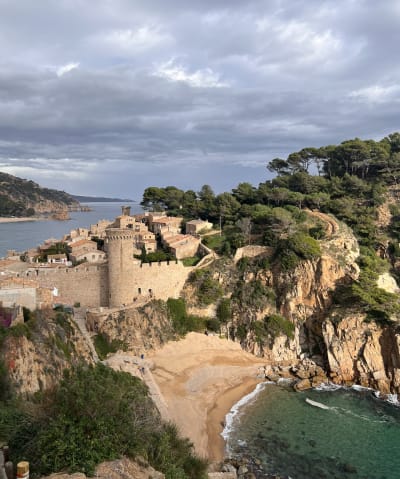
Catalonia is one of Europe's great camping regions — a place where a dense concentration of genuinely different landscapes, cultures, and experiences sits within a remarkably small area. This route, "Küste, Kanäle und Katalonien" (Coast, Canals and Catalonia), captures the full range: starting in the dramatic rocky coves and whitewashed villages of the northern Costa Brava, passing through the surrealist world of Salvador Dalí, floating down the Venice-like canals of Empuriabrava, exploring medieval Girona, following the wild coastal path of the Camí de Ronda, stopping for a wine tasting at one of Catalonia's finest Penedès producers, and finishing at the ancient Roman city of Tarragona and the extraordinary flamingo-pink wetlands of the Ebro Delta.
What makes this route so well-suited to campervan travel is the extraordinary variety of campsites and the density of things to do between them. Catalonia has one of the highest concentrations of officially rated campsites in all of Europe, many of them positioned directly on or just behind the beach. The Costa Brava in particular — the "wild coast" from the French border south to Blanes — is lined with some of the finest beach campsites on the Mediterranean, many set in pine forests with direct access to transparent turquoise water. Inland, the medieval villages of the Empordà, the volcanic landscape of La Garrotxa, and the wine terraces of the Penedès offer a completely different experience that many coastal road trippers miss entirely.
The route also has outstanding food and wine at every stop. Catalan cuisine is one of the most sophisticated regional cuisines in Spain — distinct from the rest of the country in its use of fresh anchovies from L'Escala, Pals rice from the Empordà wetlands, romesco sauce from Tarragona, and the extraordinary tradition of cava sparkling wine from the Penedès. Every campsite on this route sits within easy reach of a market, a harbour fish restaurant, or in one case, an acclaimed Catalan winery that makes this stop genuinely unique among European camping road trips.
Camping bucket list
Visit Salvador Dalí's house-museum in Port Lligat and walk the surrealist's beloved bay at Cap de Creus at sunset
Rent an electric boat and drift through the 30 km of canals of Empuriabrava - the largest residential marina in Europe
Walk a section of the Camí de Ronda coastal path, hopping between hidden coves accessible only on foot
Spend a golden hour in medieval Girona: the Jewish quarter, the cathedral steps, the river houses reflected in the Onyar
Kayak from the beach at L'Estartit to the Medes Islands marine reserve and snorkel over coral reefs in 20-metre visibility
Taste estate-grown cava and Penedès whites at Parés Baltà winery - one of Catalonia's finest biodynamic producers
Walk inside a Roman amphitheatre with the Mediterranean shimmering behind it in Tarragona
Watch flamingos feed in the rice paddies of the Ebro Delta at dawn, in a landscape that feels more like the Camargue than Spain
Eat a plate of arròs al forn (baked rice) made from Ebro Delta rice beside the water at a simple delta restaurant
The Costa Brava in July and August is genuinely very busy. Cadaqués in particular - accessible only by a single winding mountain road - can have traffic queues stretching several kilometres in peak summer. If you can go in May, June, or September, the coast is a completely different experience: warmer than you might expect, with calm, transparent sea, empty campsites, open restaurants, and the wild herbs of the Empordà in full bloom. The Catalan summer doesn't really begin until Sant Joan (23 June) for locals - everything before that is the quiet season that the best travellers exploit.
Mappa del percorso
Tappe
Da sapere
Watch for vehicle break-ins - park vigilantly.
Vehicle break-ins, particularly at beaches and in city outskirts car parks, are a genuine issue along the Catalan coast.
Book campsites for peak weeks very far in advance.
The Costa Brava in July and especially the last two weeks of July and first two weeks of August is one of the busiest camping regions in Europe.
Lista da preparare
Meteo e stagionalità
May
Jun
Jul
Aug
Sep
Oct