Netherlands Toll 2026: The Complete Guide for Motorhome Owners
April 20, 2026
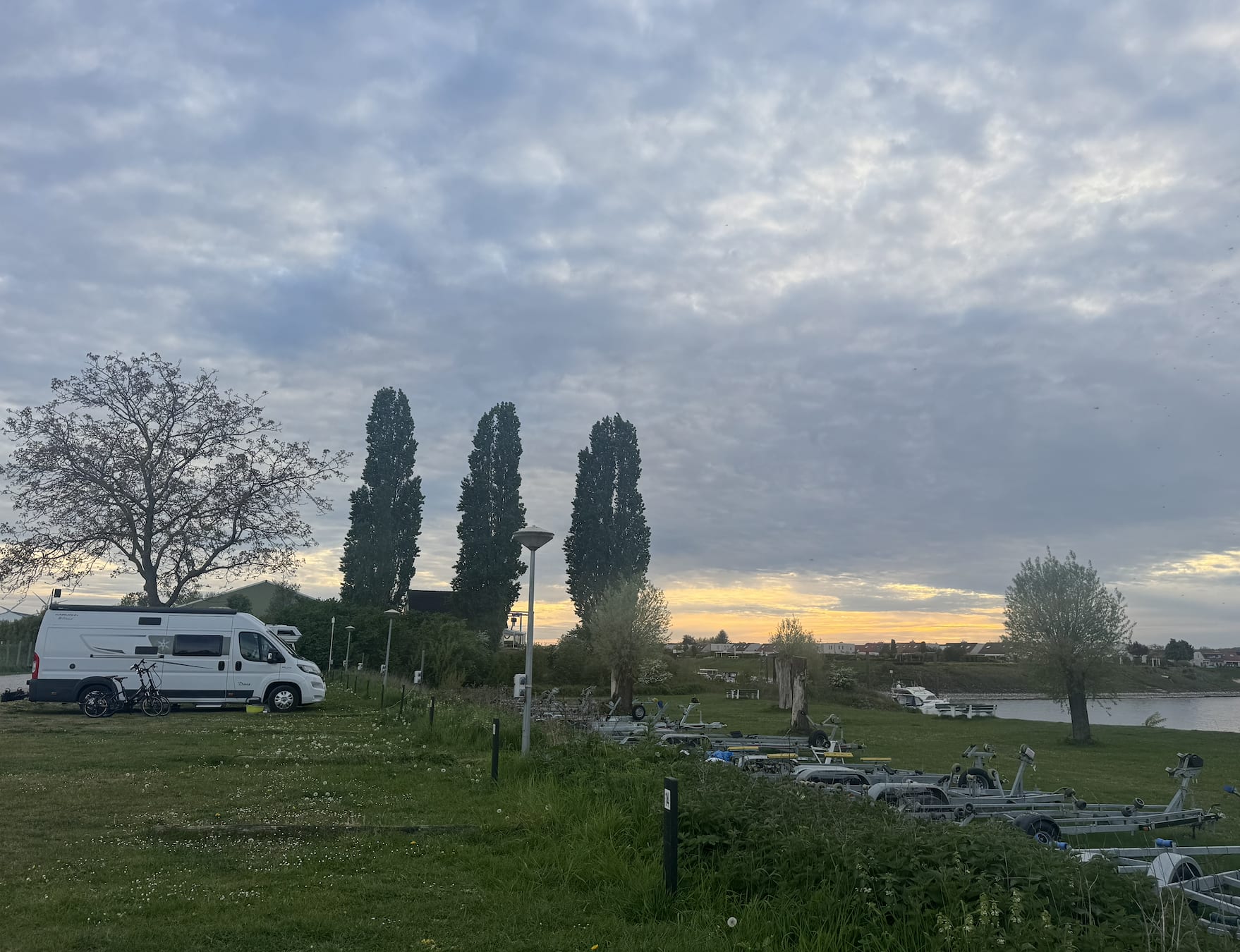
Planning a motorhome trip to the Netherlands in 2026? Everything is changing on July 1 - but don't panic. This guide explains exactly who pays what, how to protect yourself from wrongful fines, and what the A24 e-TOL means for every camper, no matter the size of your rig.
What Is the Vrachtwagenheffing - and Why Should Campers Care?
On 1 July 2026, the Netherlands introduces its long-awaited vrachtwagenheffing (Dutch truck toll), a distance-based charge covering nearly the entire motorway network plus selected provincial and municipal roads. The system has been in development for years, and it fundamentally changes how heavy vehicles are charged for road use in the country.
The headline news for campers: most motorhomes are not affected. But the details matter, because a misclassified vehicle could land you with an unexpected fine. Understanding the system before you cross the border is the difference between a stress-free road trip and dealing with paperwork from abroad.
The Dutch government's goals are twofold. First, to make foreign trucks contribute to the infrastructure they use — previously, foreign hauliers could drive through the Netherlands without paying a cent toward road maintenance. Second, to incentivise greener freight transport by tying the per-kilometre rate to a vehicle's CO₂ emission class. Revenue is earmarked for subsidies supporting electric truck adoption and charging infrastructure.
Who Pays the Vrachtwagenheffing - and Who Doesn't?
The toll applies to vehicle categories N2 and N3 — that is, commercial goods vehicles with a technically permissible maximum mass (tpmm) of more than 3,500 kg. This is the defining rule, and it applies to both Dutch-registered and foreign vehicles alike.
The average rate is approximately €0.191 per kilometre, though the actual figure depends on the vehicle's weight band and CO₂ emission class. A Euro 6 truck with a tpmm of 16 tonnes pays around €0.16/km, while heavier combinations above 32 tonnes pay around €0.20/km. Electric vehicles in the same weight categories pay a heavily discounted rate of roughly €0.035–0.038/km.
Exempt by default (no registration needed):
Emission-free (electric or hydrogen) light commercial vehicles up to 4,250 kg
Refuse collection vehicles, street sweepers, and sewage tankers
Police and fire service vehicles
Vintage trucks 40 years old or older used solely for private purposes
Standard motorhomes registered as category M1 or with bodywork code SA (Wohnmobil/motorhome)
Subject to the toll:
All N2 and N3 category goods vehicles over 3,500 kg tpmm
Vehicles that were originally type-approved as N2 but later re-rated to 3,500 kg or below - the legal vehicle category on the registration document is what counts, not the current rated weight
Any vehicle with an N-class registration that has been converted internally (e.g. a box truck with a bed inside) but remains classified as a commercial vehicle
The Critical Document Check: Reading Field J on Your Registration
Your motorhome's classification is found in your vehicle registration document (Fahrzeugschein / logbook) under field J - the vehicle category. This single entry determines whether you are toll-exempt.
If your rig is a converted expedition vehicle, an overland truck, or a heavy coachbuilt that was originally registered as a commercial chassis, check field J carefully. The vehicle's physical weight or how you use it is irrelevant - only the legal category matters.
Expedition & overlander owners: If you drive a purpose-built expedition vehicle on a commercial truck chassis (Iveco Daily N2, Mercedes Unimog, MAN TGE N2, etc.) and your registration still shows category N2 or N3, you are liable for the toll even if you have converted it entirely into living accommodation. This is confirmed by Dutch authorities.
Heavy Motorhome Owners (Over 3.5t): Why You Must Pre-Register
Here is where it gets important for owners of large semi-integrated motorhomes, A-class coaches, and overlanding rigs that exceed 3,500 kg but are correctly registered as M1 or SA category.
The vrachtwagenheffing enforcement system uses automatic number plate recognition (ANPR) cameras positioned across the toll network. These cameras scan passing licence plates and cross-reference them against a vehicle database to determine toll liability. The problem: the system cannot always retrieve complete vehicle data from foreign national registries in real time.
As a result, a large motorhome with a foreign plate — especially one that looks visually similar to a van conversion or truck — may be flagged as a potential N2/N3 vehicle. If the system cannot confirm your exempt M1 status instantly, it may issue a toll demand or enforcement notice by post.
The solution: register your vehicle on the whitelist
The official portal at vrachtwagenheffing.nl (available in English and German) allows foreign owners of exempt vehicles over 3,500 kg to register their licence plate. Once registered, your plate is marked in the system as an M1/SA exempt vehicle, and the ANPR cameras will not flag it.
How to register:
Visit vrachtwagenheffing.nl/en (or /de for German)
Navigate to the exemption/dispensation section
Submit your licence plate and vehicle category documentation
You will receive a written confirmation within a few days
Keep the confirmation with you during your trip. If you ever receive a wrongful toll demand, the confirmation document is your proof of exemption.
Important note as of April 2026: The official registration portal for foreign vehicles was not yet open at time of writing, as the system launches on 1 July 2026. Check vrachtwagenheffing.nl/en regularly — the window to register will open before the July launch date. Registering as early as possible is strongly recommended.
Summary: Your Pre-Trip Checklist for the Netherlands in 2026
Use this before every trip to the Netherlands from July 2026 onwards:
1. Check field J on your registration document Confirm your vehicle is category M1 or carries bodywork code SA. If it shows N2 or N3, you are subject to the vrachtwagenheffing.
2. If your M1 motorhome weighs over 3,500 kg: register for the exemption whitelist Visit vrachtwagenheffing.nl/en as soon as the registration portal opens for foreign vehicles. File once, keep the confirmation document in the vehicle.
3. If you are subject to the toll (N2/N3 class): arrange an OBU You will need an On-Board Unit (OBU) from an approved provider before 1 July 2026. Providers include NedLinq (Netherlands-only), Telepass (European EETS), and AS24/TotalEnergies. The OBU is a small device installed in the vehicle that records kilometres on the toll network and bills you per use.
4. Check your route for the A24 Are you driving through the Rotterdam region? If your navigation takes you over the A24 Blankenburgverbinding, plan to pay at e-tol.nl in advance. If you'd rather skip the toll, route via the Beneluxtunnel (A4/A15/A20).
5. Keep your documents accessible Carry your registration document, any exemption confirmation from vrachtwagenheffing.nl, and your e-TOL payment confirmation if applicable
Published on April 20, 2026