1.Overview
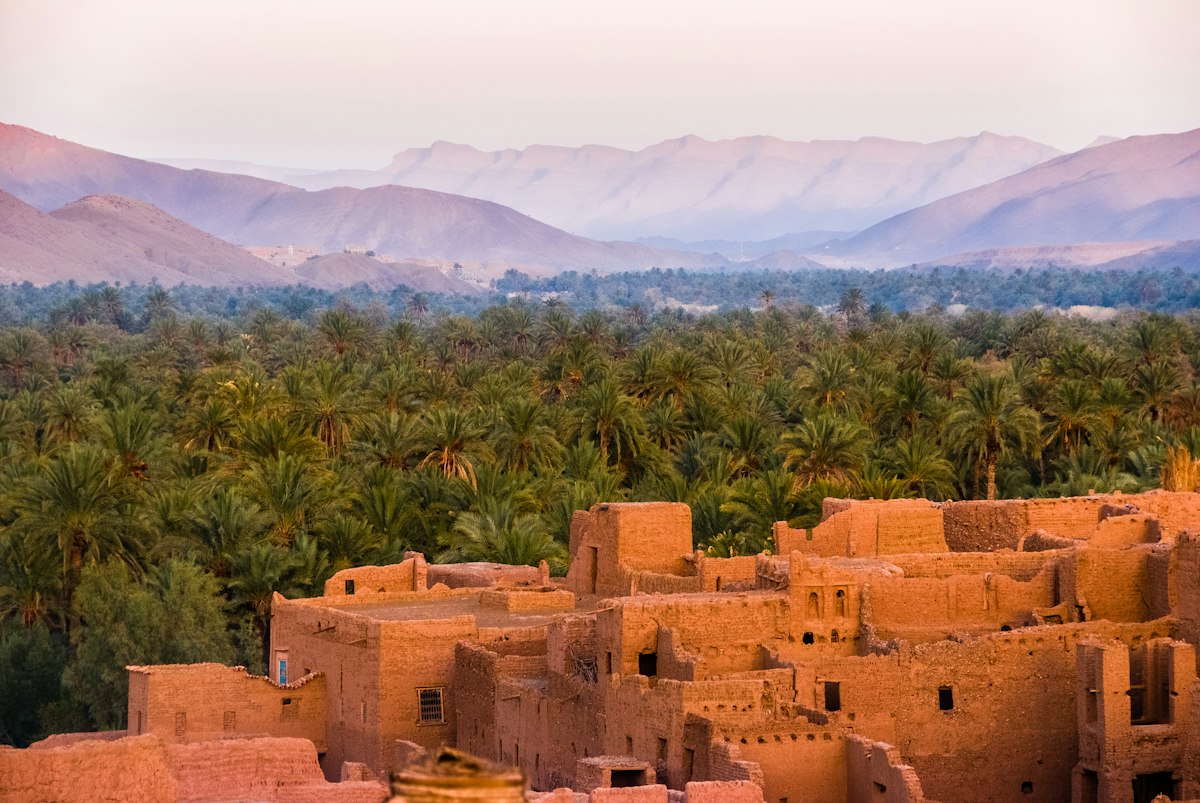
Morocco is a fascinating destination for campers, offering a unique blend of Arab culture, breathtaking natural landscapes, and countless opportunities for adventure. The country stretches from the Atlantic coast in the west, across the Atlas Mountains, all the way to the Sahara Desert in the south and east. The variety of landscapes is remarkable: snow-capped peaks in the High Atlas, fertile valleys, endless desert dunes, and picturesque stretches of coastline. Morocco has something for every type of traveler – from comfortable, well-equipped campsites near the imperial cities to adventurous wild camping in the desert.
The best time for camping in Morocco is March to May and September to November, when the weather is mild and pleasant. Summer months can be extremely hot in the desert, while winters in the mountains can be cold and snowy.
The coastal regions, however, remain comfortably temperate all year round.
If you go to Morocco, you will experience:
relatively easy arrival with your own vehicle
a dense network of campsites and overnight spots
lower living costs compared to Europe
plenty of contact with incredibly hospitable locals — if you're open to it!
2.Getting There
2.1 Arriving with Your Own Vehicle
The classic way to reach Morocco is by driving your own car or motorhome through France and Spain.
France
Motorway tolls can be paid easily by debit or credit card.
For low-emission zones in Paris, Lyon and Grenoble, a Crit’Air environmental sticker is required – also for motorhomes.
You can order it cheaply via the official website of the French Ministry of the Environment. Third-party sellers are usually far more expensive.
Spain
Many Spanish motorways are now toll-free, including the important Barcelona–Algeciras corridor.
Along the coastal route near Barcelona, organised criminal groups occasionally target tourist vehicles.
Common scams include:
Fake breakdowns with people asking for help
Golden rule:
Do not stop on the motorway. Ignore the drivers if you are not sure about the intention.
2.2 Ferry Connections
Travelling to Morocco by ferry is easy and flexible. Routes operate from Italy, France and Spain. Most ferries arrive in Tanger-Med, with additional services to Tanger Ville, Ceuta, Melilla and Nador.
Algeciras – Tanger-Med (approx. 1.5 hours).
You can buy a ticket (both ways, with an open ticket to get back in the agency Viajes Normandie - a place where vanlifers meet before going to Morocco.
Algeciras – Tanger-Med
Tarifa – Tanger Ville (fast ferry, approx. 1 hour)
Motril – Melilla
Algeciras – Tanger-Med
Almeria / Motril – Nador
Genoa – Tanger-Med (approx. 42 hours)
Additional routes from Sète / Barcelona – Nador
Tip for Campers:
There are specialised agencies offering good motorhome fares and friendly service. One popular option near Algeciras is Viajes Normandie, highly recommended by many campers for good prices and exceptionally helpful staff. On-site you can also exchange money (Dirham). Every customer even receives a small farewell gift – a bag of pastries and wine (2025).
3.Entry & Formalities
3.1 Documents & Entry Formalities
For EU citizens entering Morocco as tourists:
Passport
Must be valid for at least 6 months upon entry (Children need their own children's passport.)
An ID card is not sufficient.
Visa
Upon entry, you receive a 90-day stay permit (tourism).
An extension to a total of 6 months is possible under certain conditions.
Upon entry, you receive an entry stamp and an entry number; on ferry routes this is often done on board, and forms are usually provided there..
Travel Insurance (recommended)
It is strongly recommended to have valid travel health insurance that covers medical treatment in Morocco. Most EU health insurances do not cover treatment outside the EU, and private medical care in Morocco must be paid directly on site.
Before traveling, contact your insurance company to make sure your policy includes Morocco and to understand exactly what is covered.
A good travel insurance should include:
emergency medical treatment
hospital stays
medical repatriation to your home country
coverage for pre-existing conditions (if necessary)
a 24/7 support hotline
3.2 Vehicle Regulations
When you enter Morocco with your own vehicle, several important rules apply. Your vehicle is imported only temporarily, and it is linked directly to you as the driver. Each person may bring only one vehicle into the country, although trailers are allowed.
Upon arrival, customs officers will give you a small entry slip that includes your personal information, the validity period, and the vehicle’s license plate number. It is essential not to lose this slip, as you must hand it back to customs when you leave Morocco.
A vehicle may stay in the country for a maximum of six months per calendar year, and it is your responsibility to ensure you do not exceed this limit.
If you return home by plane while your vehicle stays in Morocco, you should park it on a secure parking lot or at a guarded campsite, take all vehicle documents with you, and register the situation with customs at the airport. The airport customs office will provide the required form and ask for copies of your passport and vehicle registration. They will also stamp your entry slip accordingly.
Insurance
You must have liability insurance that is valid in Morocco, which is normally proven with the “Green Card.” Many European insurers no longer include non-EU Mediterranean countries in their coverage. If your insurance does not cover Morocco, you will need to buy short-term liability insurance at the border.
Cost for 1 Month: around 2,000 DH and you can buy it in the harbour directly after arriving to Morocco.
Western Sahara
The Western Sahara is a politically and legally special region. The German Foreign Office generally advises against traveling there, and some vehicle insurance companies exclude this area entirely. If you plan to travel toward Dakhla or anywhere in Western Sahara, always check with your insurer beforehand to confirm whether your coverage applies.
3.3 Customs and Import Rules
Personal belongings such as laptops, cameras, or a TV in a motorhome can be brought into and out of the country without problems. For pleasure goods, Morocco follows approximate limits such as 200 cigarettes or 50 cigars , and 1l of spirits plus 1l of wine per person. Drones, however, are strictly prohibited and cannot be imported.
Tip
You can store your drone in Algeciras is agency Viajes Normandie. That is a great option if you travel longer for example in Spain.
3.3 Traveling With Pets
Bringing pets into Morocco is usually straightforward. The greater challenge is returning with them to the European Union. Because the EU has strict rules to prevent the spread of rabies, certain documents and tests are mandatory.
Basic Requirements for Dogs and Cats
Every animal must be clearly identifiable through a microchip or a readable tattoo, although microchips are the modern standard accepted at all borders. A valid rabies vaccination is required and must comply with EU regulations. For first-time vaccinations, the protection becomes valid only 21 days after the injection.
For pets returning to the EU from a “non-listed” third country such as Morocco, an additional rabies antibody test (also known as the titration test) is required. This test confirms that the animal has developed sufficient antibodies. It must be carried out at least 30 days after the rabies vaccination, and re-entry into the EU is permitted only three months after the blood sample was taken. The test must be processed by an EU-approved laboratory.
This procedure ensures that no animal in the incubation phase of rabies enters the EU unnoticed. The antibody test can be done in Germany or Spain before traveling to Morocco, which is usually more comfortable and avoids stress during the return journey.
As of 2025, the test costs about 150 €, and results are typically available within 10–14 days.
A very important detail: once the antibody test has been completed correctly, it remains valid for life as long as the rabies vaccination is continuously kept up to date. This means you will not need another titration test for future trips.
4.Driving in Morocco
4.1 Types of Roads
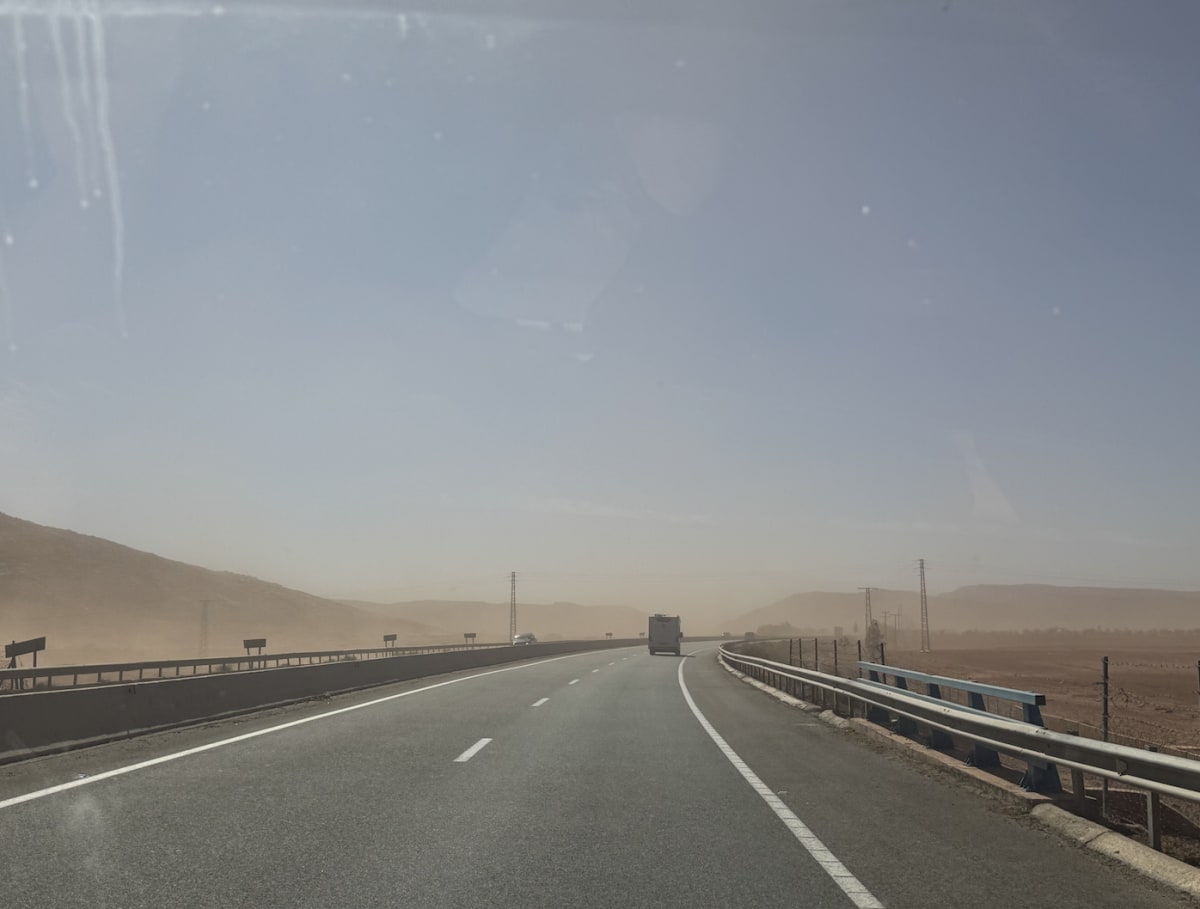
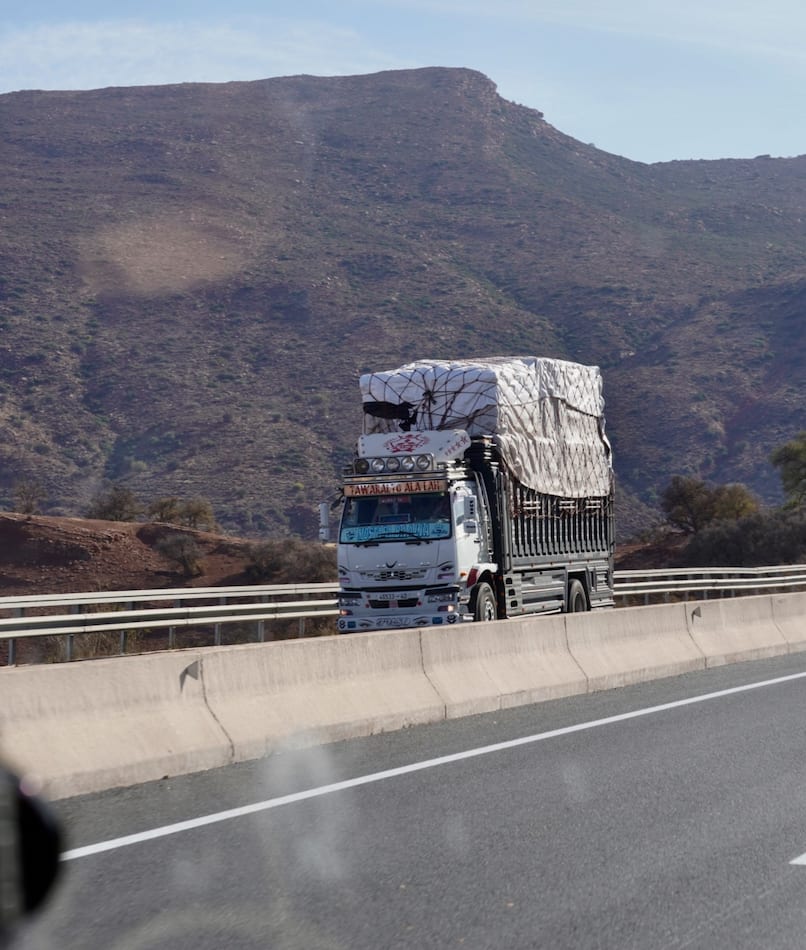
The main long-distance routes are the N-roads, such as the N1 running along the Atlantic coast from Tangier to the Mauritanian border. Morocco also has a growing system of toll motorways, many of which are modern and well maintained. Maps, traffic information and webcams are available online.
4.2 Traffic Regulations
Speed limits are similar to those in Europe: 120 km/h on motorways, 100 km/h on main roads, and 40–60 km/h in towns. Morocco has a strict zero-alcohol rule (0.0 ‰). Police and radar controls are common, especially just after leaving towns, so be careful not to accelerate too quickly.
Night-time driving is considerably riskier. Pedestrians, cyclists and donkey carts often travel without lights, animals may rest on the warm pavement, and dangerous sections are not always marked clearly.
4.3 Fuel
Morocco has a dense network of petrol stations. Large service areas on the highways often offer restaurants, hotels, camper facilities and sometimes even pools. Diesel quality differs from European diesel, and particle filters may regenerate more frequently, but this is generally not problematic on holiday trips. LPG is essentially unavailable, although AdBlue can be found at some stations, for example at Afriquia in Tiznit.
As of November 2025, fuel prices average around 14 DH for petrol and 12 DH for diesel.
In remote desert tracks, fuel stations can be completely absent - you should always carry enough reserve for at least double your planned distance, as detours, sand, and navigation difficulties can significantly increase consumption. In mountainous regions, card payments may not always work.
5.Camping
5.1 Official Campsites
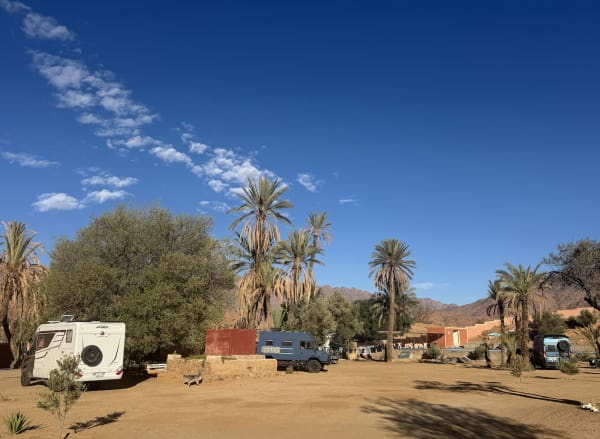
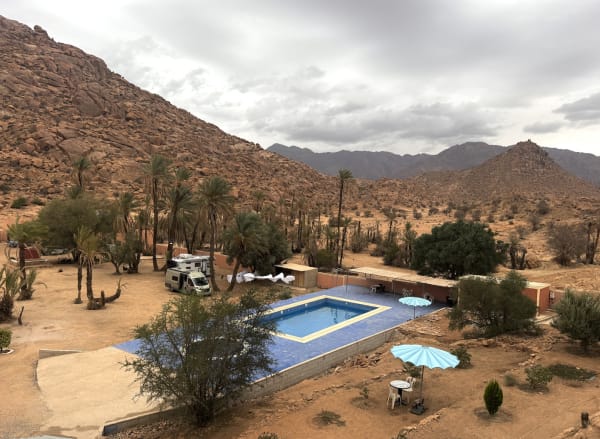
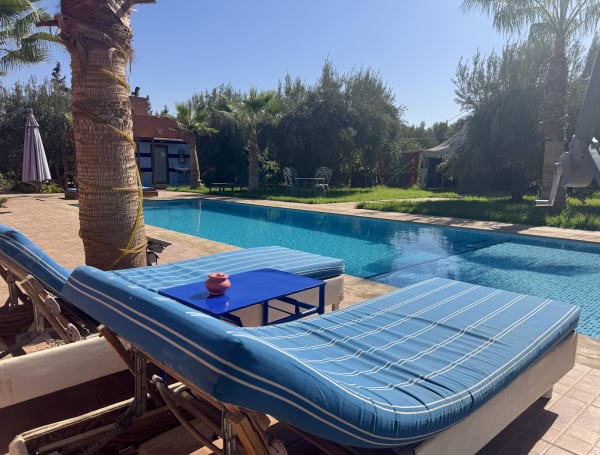
Morocco now offers a dense network of official campsites that combine comfort, friendly hosts, and scenic locations—from Atlantic beaches to the Atlas Mountains and desert oases. Campsites typically provide full infrastructure, including electricity, fresh water, grey-water and chemical toilet disposal, as well as sanitary buildings with toilets and showers. Many sites also have swimming pools, sometimes even a hammam or spa, and restaurants where you can enjoy local cuisine. Washing machines or laundry services are common, and the locations are often attractive and peaceful. Some places provide simple parking areas with minimal facilities, while others offer full services on hotel or restaurant grounds.
5.2 Wild Camping
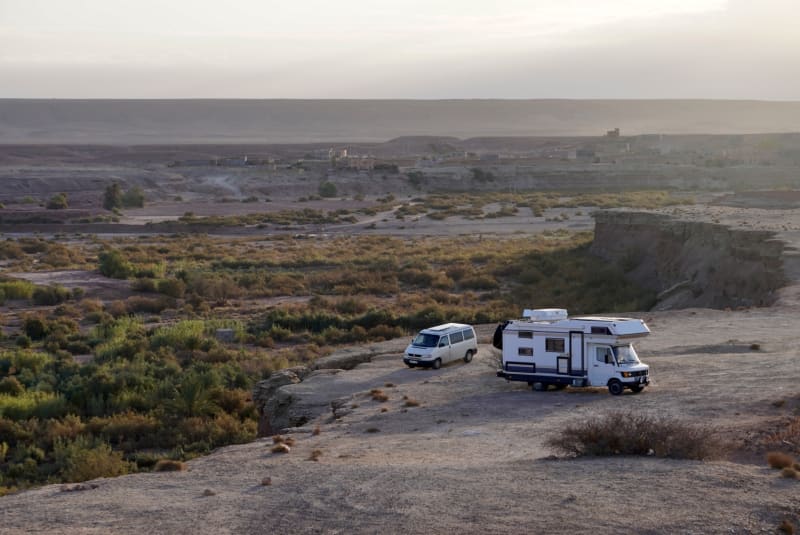
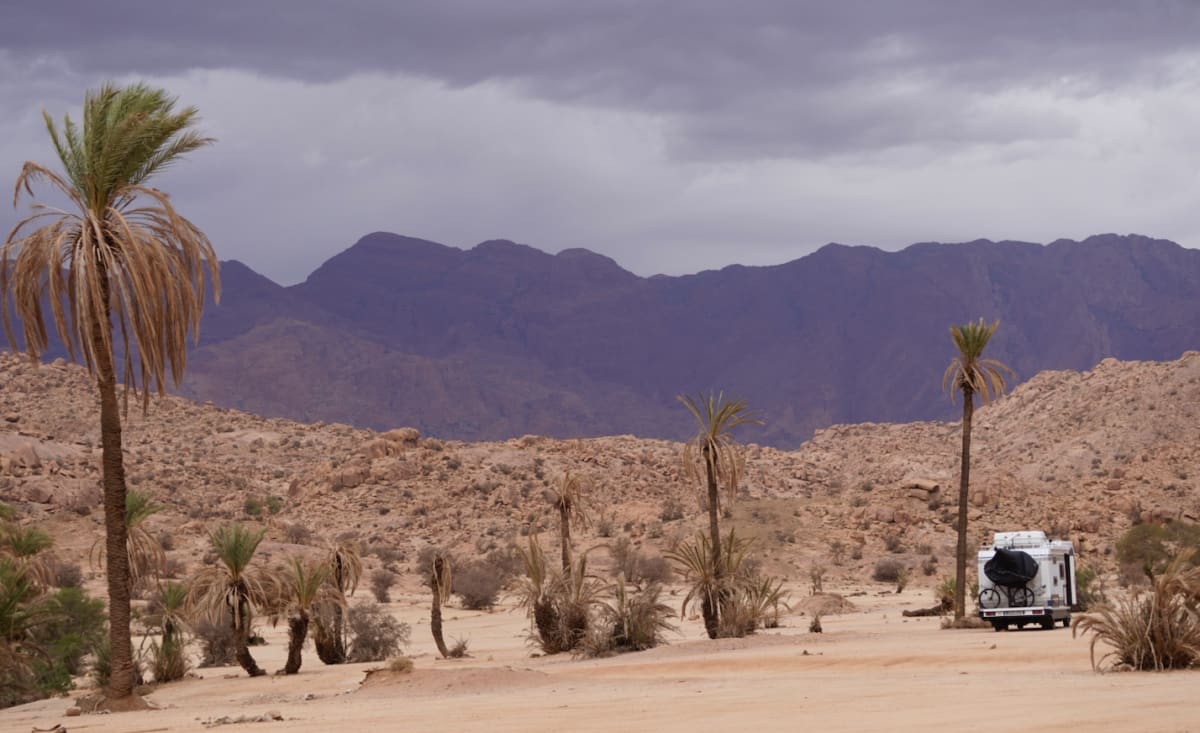
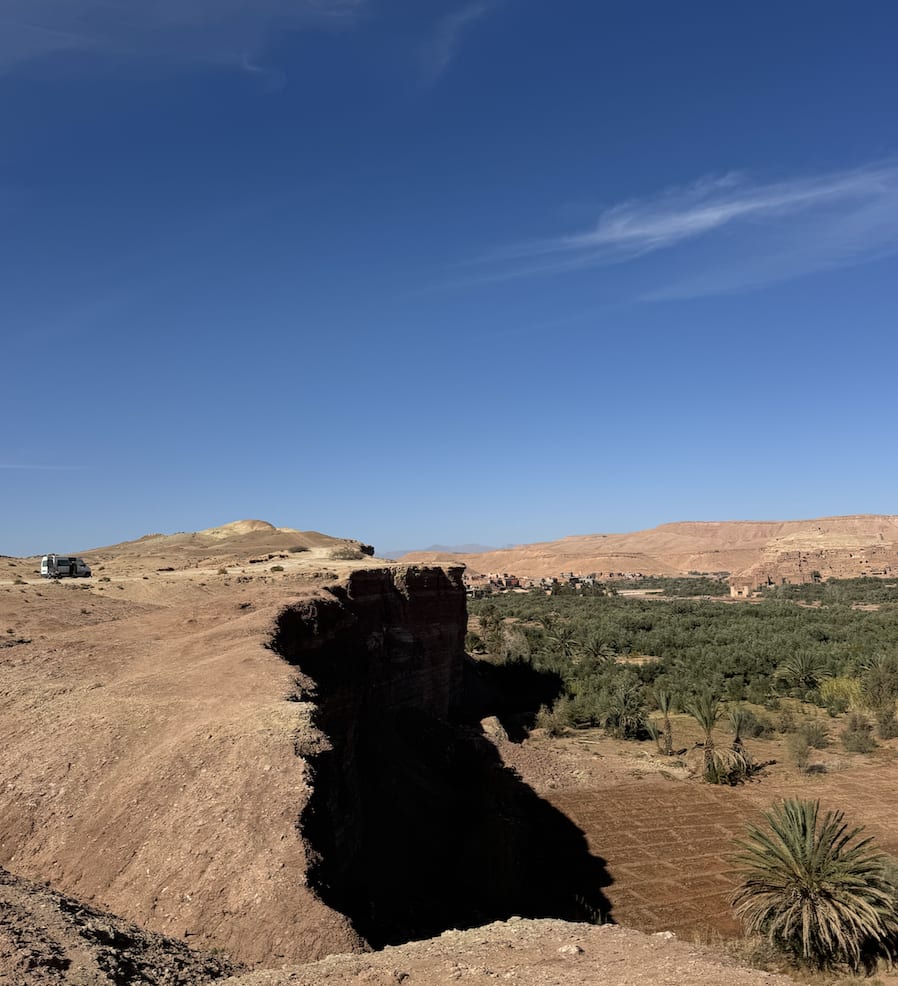
Wild camping is handled very differently depending on the region. Along the coastline, authorities monitor certain zones more strictly because human-smuggling activities to the Canary Islands have occurred in the past. Flat, easily accessible beaches—especially near river mouths—are watched closely, and you may be asked to move to an official campsite or a secured parking area. Inland, in mountainous regions, deserts and rural valleys, free-camping is often tolerated if you behave respectfully, keep the area clean and avoid disturbing anyone. Always follow the advice of locals, guards or shepherds; if they say a spot is unsafe, you should move immediately. They usually know the area very well and can judge potential risks far better than travelers.
6.Services & Food
6.1 Water and Waste
Most campsites provide fresh water as well as facilities for disposing of grey water and chemical toilet waste. Even if you do not drink the water from your tank, using a filter is still recommended. Bottled still water is very cheap and widely available throughout the country, while sparkling water is harder to find and often significantly more expensive.
6.2 Laundry
Many campsites now offer washing machines for a small fee (typically around 5 €), and some even provide a full laundry service. However, the washing machines are often older or different from what you may be used to in Europe, so cycles can take longer or work slightly differently.
6.3 Gas
In some locations, such as gas depots or certain campsites, European gas bottles can be refilled, or you can exchange your bottle for a Moroccan one.
6.4 Shopping
Every village has small local shops where you can buy essentials, fresh produce and water. Larger cities have supermarkets similar to those in Europe, such as Carrefour, Atacadao and Marjane.
Carrefour and Atacadao often sell alcohol, though at higher prices than in Europe, and usually in a separate section with its own checkout.
Big shopping centers may include hardware stores, boutiques, and familiar fast-food chains like McDonald’s.
6.5 Internet and SIM Cards
Since Morocco is not part of the EU roaming zone, it’s best to buy a local SIM card. INWI and Orange cover most of the country well and offer inexpensive data packages. A popular choice is INWI’s digital plan “win by INWI,” which you activate through the app. For example, 70 GB cost around 169 DH (about 17 €). You only need your passport and a credit card. INWI also has an unlimited monthly plan, but you can only get it in their physical shops.
If you want to be online right away, you can even buy an INWI SIM card beforehand in Spain at the agency La Normandie.
Generally, mobile reception in Morocco is good, but there are still places—especially in the mountains, deserts, and remote valleys—where the signal drops or becomes very slow. Many travelers take Starlink as a backup. Even though it is officially not supported in Morocco, it currently works without problems in most areas.
6.6 Food – What You Should Try
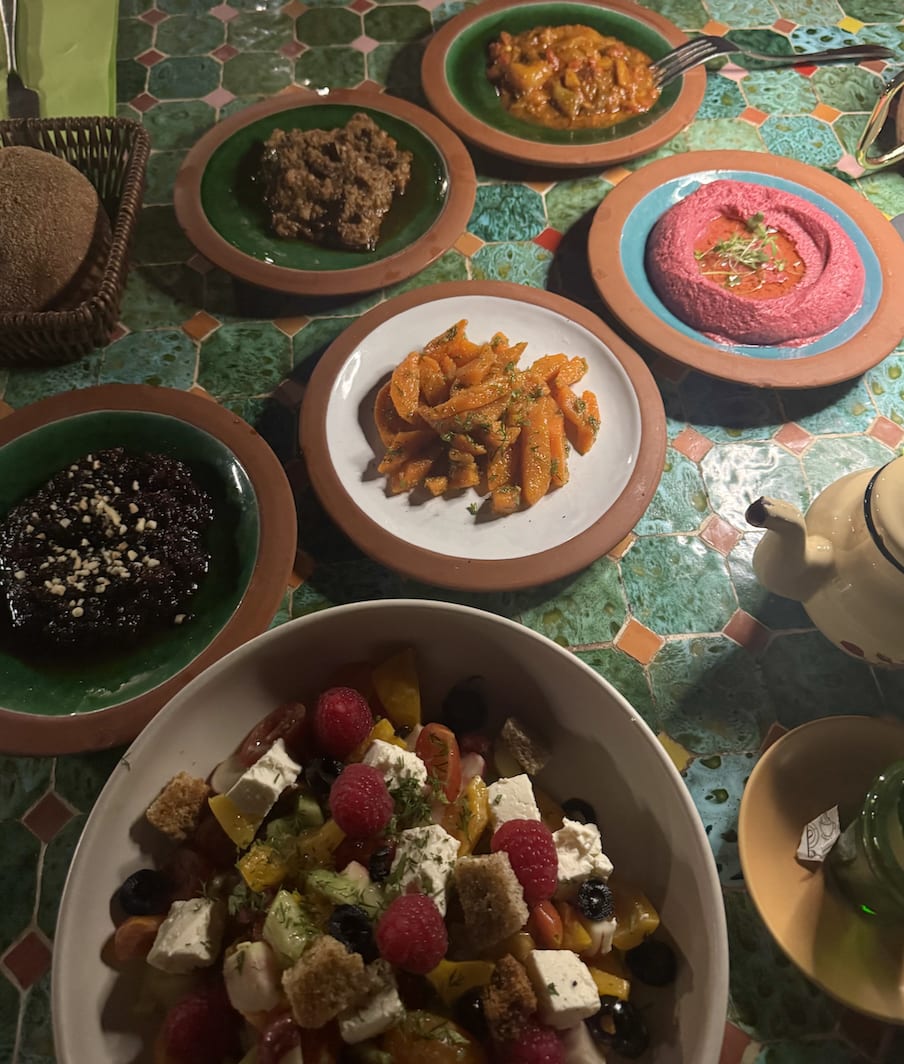
Morocco is a paradise for lovers of local cuisine. Instead of relying on food brought from home, it is absolutely worth exploring the traditional dishes that make the country so special.
One of the must-try dishes is the famous tajine, which is slowly cooked in a clay pot over low heat. Popular varieties include tajine with lemon chicken and olives, beef with prunes, or seasonal vegetarian options.
Couscous is another classic, usually served on Fridays, consisting of steamed semolina topped with vegetables and either chicken or lamb.
The hearty Harira soup, made from tomatoes, chickpeas, lentils and noodles, is perfect for lunch or a light dinner.
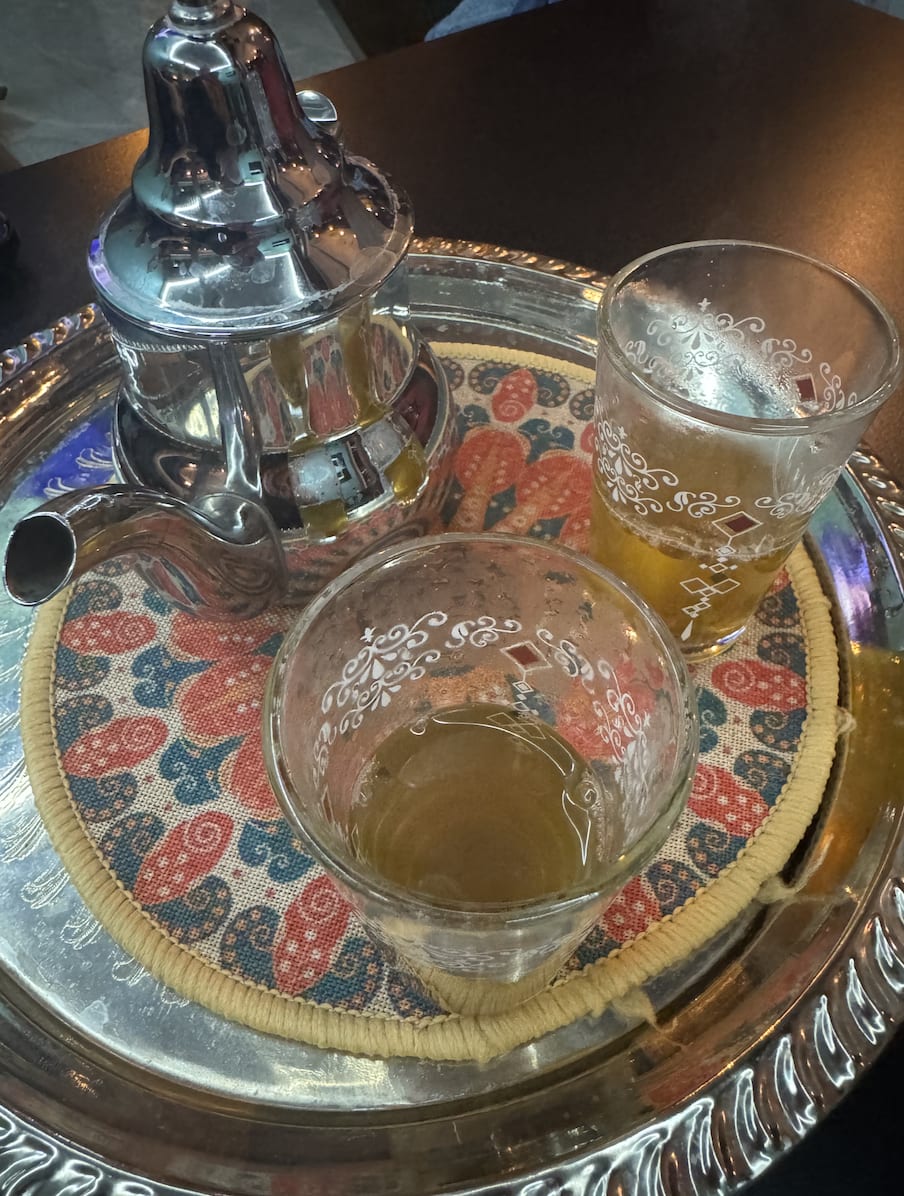
No visit to Morocco is complete without trying Moroccan mint tea, often jokingly called “Moroccan whisky,” freshly squeezed orange juice, and the strong, aromatic local coffee.
7.Routes
8.Highlights
9.Costs
Overall, Morocco is a relatively inexpensive country to travel in. Groceries, simple restaurant meals, market goods, and services such as taxis or laundry are noticeably cheaper than in Europe. Souks in particular offer very good prices for fresh fruit, vegetables, and spices.
When shopping at markets, bargaining is part of the experience. It is considered normal and is usually done with a smile. The key is to keep it relaxed and friendly – never aggressive or overly serious. Think of it as a small game. When both sides enjoy the interaction, it often leads to a pleasant conversation and a fair price that makes everyone happy.
Large international supermarkets, such as Carrefour, are widely available in bigger cities, but prices there are considerably higher than at local markets and small shops.
10.Safety
Accidents in Morocco
If you have any kind of traffic accident, you must always call the police. Take plenty of photos of the scene and all damages to document everything properly.
Emergency numbers in Morocco:
Fire brigade: 15
Gendarmerie: 177
Police: 19
Begging children & stone throwers
Along some tourist routes, children may approach vehicles, wave, or ask for money or sweets. Only in very rare cases do children throw small stones at larger vehicles, usually out of boredom or in an attempt to get attention. Most of the time, people in Morocco greet you warmly on the street, smile, or simply wave as you pass.
Tips:
If you see children picking up stones, slow down and, if necessary, stop briefly.
Pay extra attention in very rural regions.
Possible damage:
Small stone chips on windows can happen.
Serious incidents are extremely rare.
In general, Morocco is not a dangerous country to travel in! Most encounters are friendly and welcoming, but staying aware of your surroundings helps avoid small inconveniences.
Stray dogs
In some regions, especially around villages or at the outskirts of towns, you may encounter stray dogs. Sometimes there are quite a few of them, but they are generally not aggressive. Most keep their distance and are simply looking for food. If you feel comfortable, bringing them a little leftover food is perfectly fine and often appreciated. Just be cautious not to encourage them to follow your vehicle or gather in unsafe places near traffic.
Health
Your packing list already covers most essentials. It is useful to bring:
A small travel first-aid kit and valid international health insurance
Enough drinking water, especially when driving remote piste routes
Hygiene items, including wet wipes (very practical in a camper)
Insect repellent and mosquito spray
11.Conclusion
Traveling through Morocco with your own camper is an enriching and memorable experience. The country offers a fascinating mix of vibrant cities, dramatic landscapes, and warm hospitality. With good preparation, respect for local rules, and a bit of flexibility, the journey is both safe and enjoyable.
While some situations — such as occasional weak mobile signal, or regional restrictions on free-camping — may require attention, they do not diminish the overall travel experience. Most interactions with locals are friendly, markets are lively and affordable, and the road network allows you to explore everything from the coast to the desert at your own pace.
If you stay aware, plan sensibly, and keep an open mind, Morocco rewards you with unforgettable impressions, culinary highlights, and countless moments of genuine connection. It is a country that invites discovery — and one that many travelers return to again and again.