1.Overview
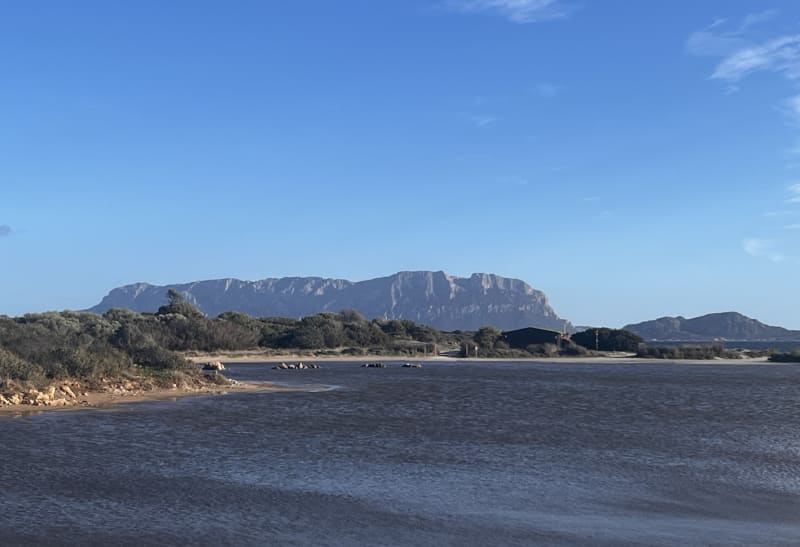
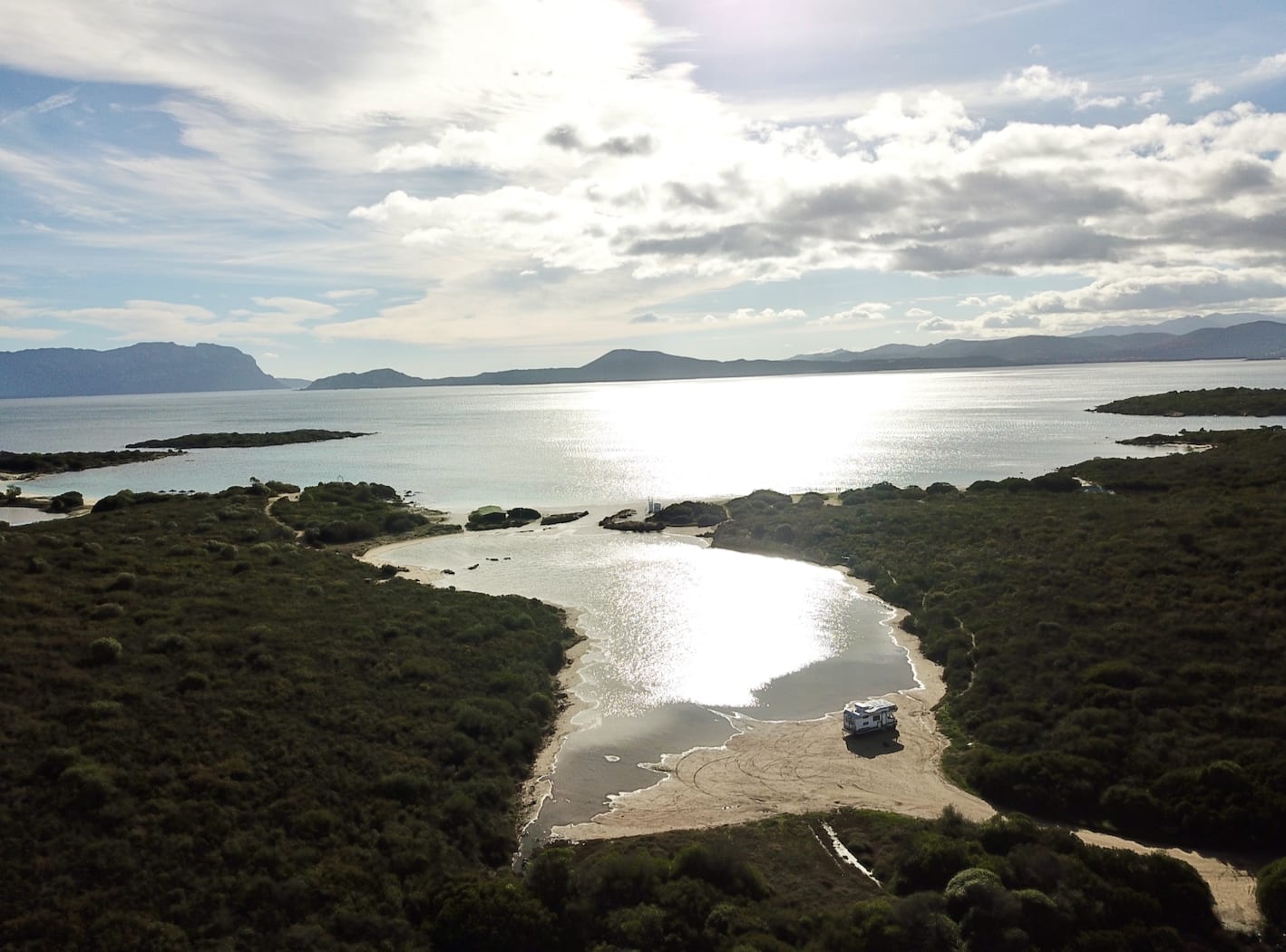
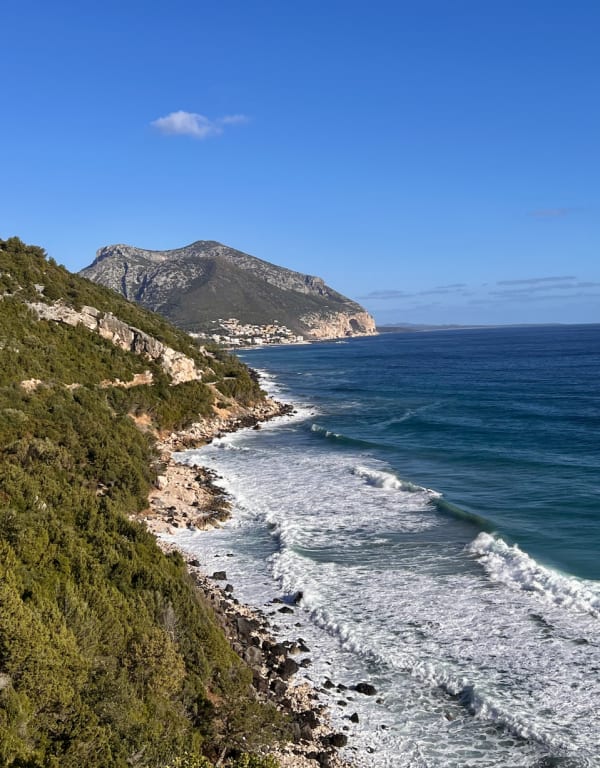
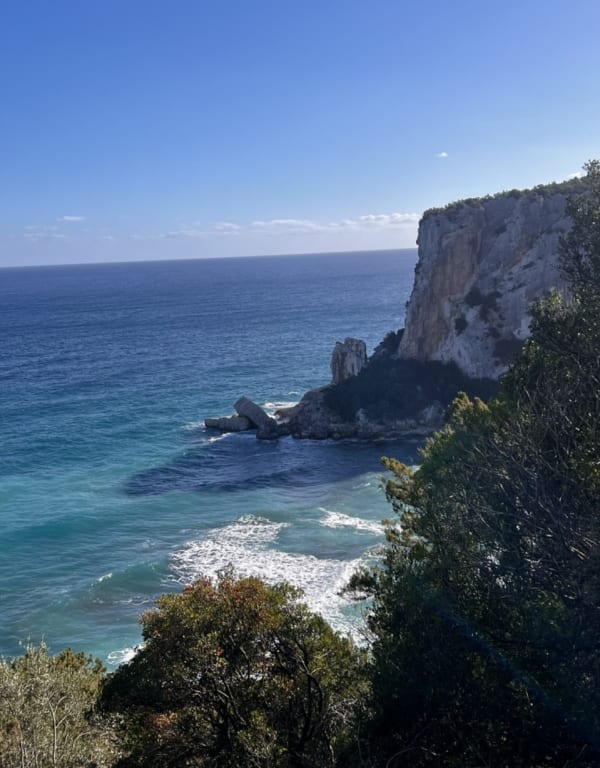
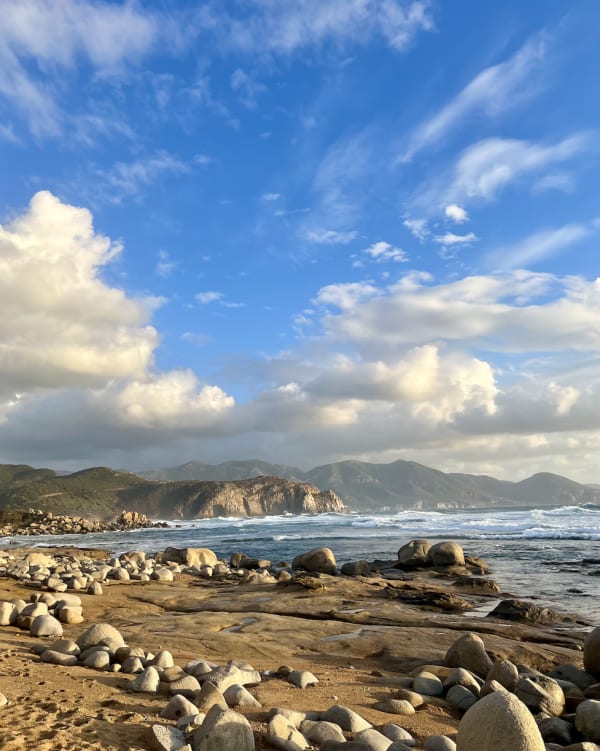
If you've ever seen pictures of Sardinia's beaches, you'll probably understand why so many people want to visit. White sand, incredibly clear turquoise water and little bays surrounded by rocks and greenery. Some places really do look like the Caribbean.
But what makes Sardinia interesting for a campervan trip is everything beyond the beaches.
Drive just a little further inland and the scenery changes completely. You'll find winding mountain roads, small villages, sheep grazing in open fields and landscapes that feel surprisingly remote for such a popular holiday destination.
And that's exactly why we'd recommend exploring Sardinia with a camper rather than staying in one place.
You can spend a morning swimming in crystal-clear water, drive through the mountains in the afternoon and end the day in a small village with a plate of homemade pasta.
Our advice? Don't plan your entire trip around the most famous beaches. They're beautiful, of course, but some of the most memorable places are the ones you discover along the way.
One thing to keep in mind: Sardinia is bigger than it looks on the map. You could easily spend three or four weeks exploring the island without seeing everything.
If you only have a week, choose one region instead of trying to drive around the whole island.
2.Getting There
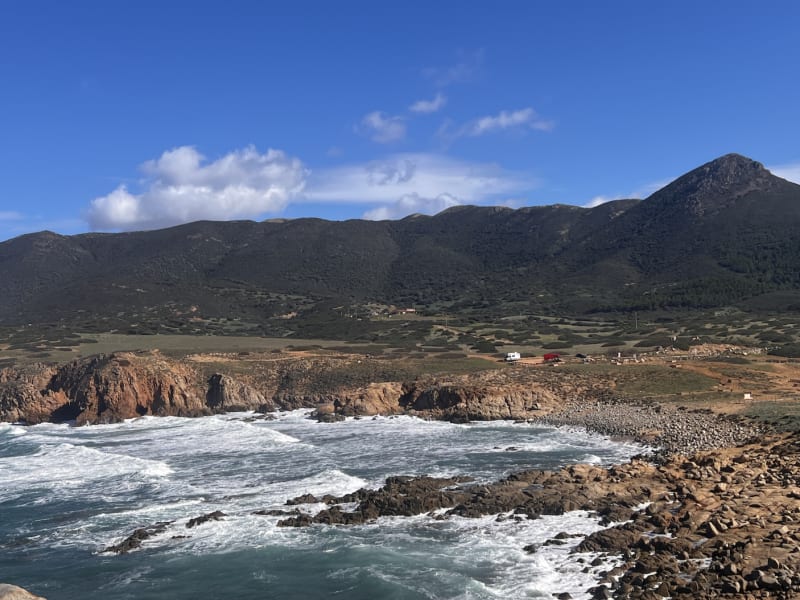
Most travellers reach Sardinia by ferry from mainland Italy or France.
High season (June–September) is extremely busy, and motorhomes should book in advance.
2.2 Ferries to Sardinia – Routes, Companies & Travel Times
Sardinia is one of the best-connected islands in the Mediterranean. All ferries accept campervans, motorhomes and trailers.
🇮🇹 Ferries from Italy
1. Livorno → Olbia / Golfo Aranci
Companies: Moby Lines, Grimaldi Lines
Duration: 6–8 hours (day) / 8–10 hours (night)
Notes: One of the most popular camper routes.
2. Genoa → Olbia / Porto Torres
Duration: 10–12 hours
Notes: Mostly overnight sailings; excellent for travellers from northern Europe.
3. Civitavecchia (Rome) → Olbia / Arbatax / Cagliari
Companies: Tirrenia, Grimaldi
Duration:
Olbia: 6–8 hours
Arbatax: 9–10 hours
Cagliari: 13–15 hours
Notes: Fastest route from central Italy.
4. Piombino → Olbia
Company: Moby Lines
Duration: 5–6 hours
Notes: Shortest sailing from Tuscany.
🇫🇷 Ferries from France
5. Toulon → Porto Torres
Company: Corsica Ferries
Duration: 9–11 hours
6. Marseille → Porto Torres
Company: La Méridionale
Duration: 13–15 hours
Seasonal Differences
Summer: Many departures daily, all routes active.
Winter: Limited connections - usually Genoa ↔ Sardinia & Civitavecchia ↔ Sardinia.
3.Driving
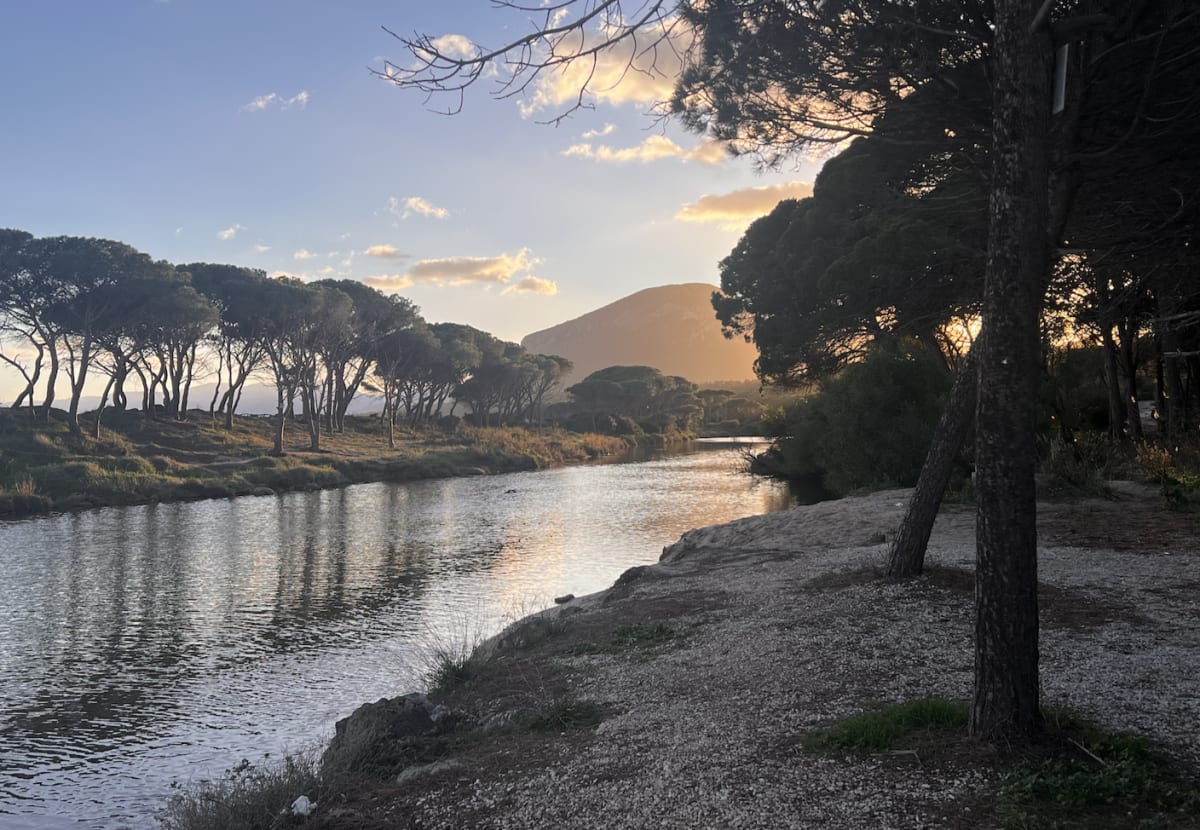
Driving around Sardinia is part of the adventure.
The main roads connecting larger towns are generally in good condition, but once you head towards smaller beaches, mountain villages or remote parts of the island, things can get a little more interesting.
Expect narrow roads, sharp bends and occasionally steep climbs.
Some of the most beautiful coastal roads are also the ones where you'll want to take your time.
What we'd recommend
Don't blindly follow Google Maps. A shortcut through a historic village might be perfectly fine in a small car but a nightmare in a large motorhome.
Check beach access roads before driving down them. Some are unpaved, narrow or unsuitable for larger vehicles.
Allow more time than your navigation suggests. You'll probably want to stop for photos, viewpoints or a spontaneous swim.
Keep an eye out for animals. Sheep, goats and other animals can occasionally wander onto rural roads.
Avoid driving into old town centres. Park outside and explore on foot instead.
If you're travelling in a larger or older motorhome, we'd particularly recommend checking the route before heading into the mountains.
And remember, you don't have to drive every day. Sardinia is the kind of place where staying somewhere for two or three nights can be much more enjoyable than constantly moving.
4.Camping
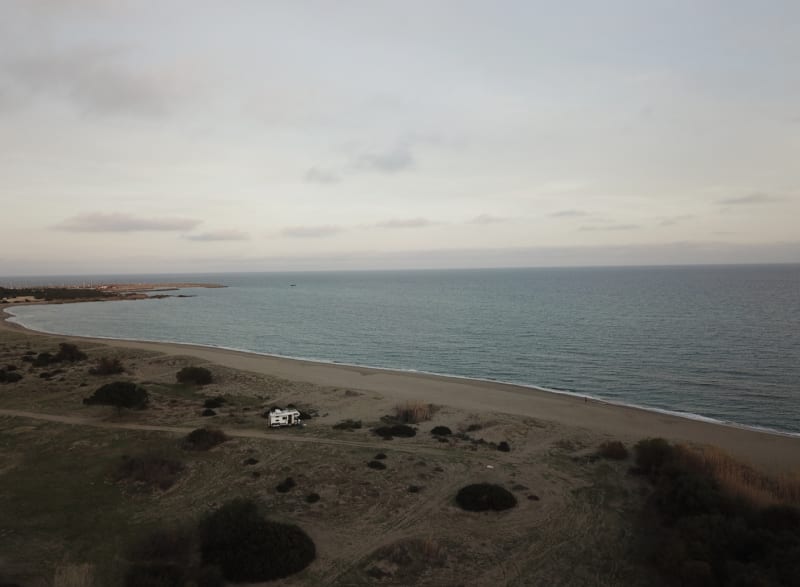
5.1 Campsites (around 200 island-wide)
Sardinian campsites are famous for:
stunning beachfront locations
pine forests providing natural shade
excellent swimming opportunities
restaurants, beach bars, small shops
modern facilities, clean showers
family-friendly design
Important:
Most campsites close for winter - usually from October until late April.
From November to March, only a handful remain open, mostly near Cagliari and Olbia.
Typical Prices
Low season: €20–35
High season: €40–70
Premium beachfront: €80–100
5.2 Area Sosta (Official Motorhome Stopovers)
An Area di Sosta is Italy’s version of a regulated motorhome stop — and Sardinia has many of them near beaches, marinas and coastal towns.
These are ideal if you:
travel often
want a legal overnight stop
need greywater/toilet disposal
don’t require full campsite facilities
Most offer:
fresh water
waste disposal
electricity
secure parking
proximity to towns or beaches
Prices range from €8–€25, depending on location and season.
5.3 Agricampeggio / Agriturismo Camping
This is one of the most special ways to camp in Sardinia.
Agricamping sites are located on:
olive farms
vineyards
sheep farms
rural estates
Expect:
peaceful, natural settings
homemade food (cheese, wine, olive oil)
basic but clean facilities
warm hospitality
Prices: €15–€30
Perfect for travellers who want authentic culture and quiet nights under the stars.
5.4 Wild Camping in Sardinia
Wild camping is prohibited outside authorised areas in Sardinia, and restrictions are particularly important in protected natural areas and along the coast.
You may read online that discreet overnight stays are sometimes tolerated outside the main tourist season, but this shouldn't be treated as permission.
Parking and camping are legally distinct, and local restrictions can apply even when you're not setting up chairs or an awning.
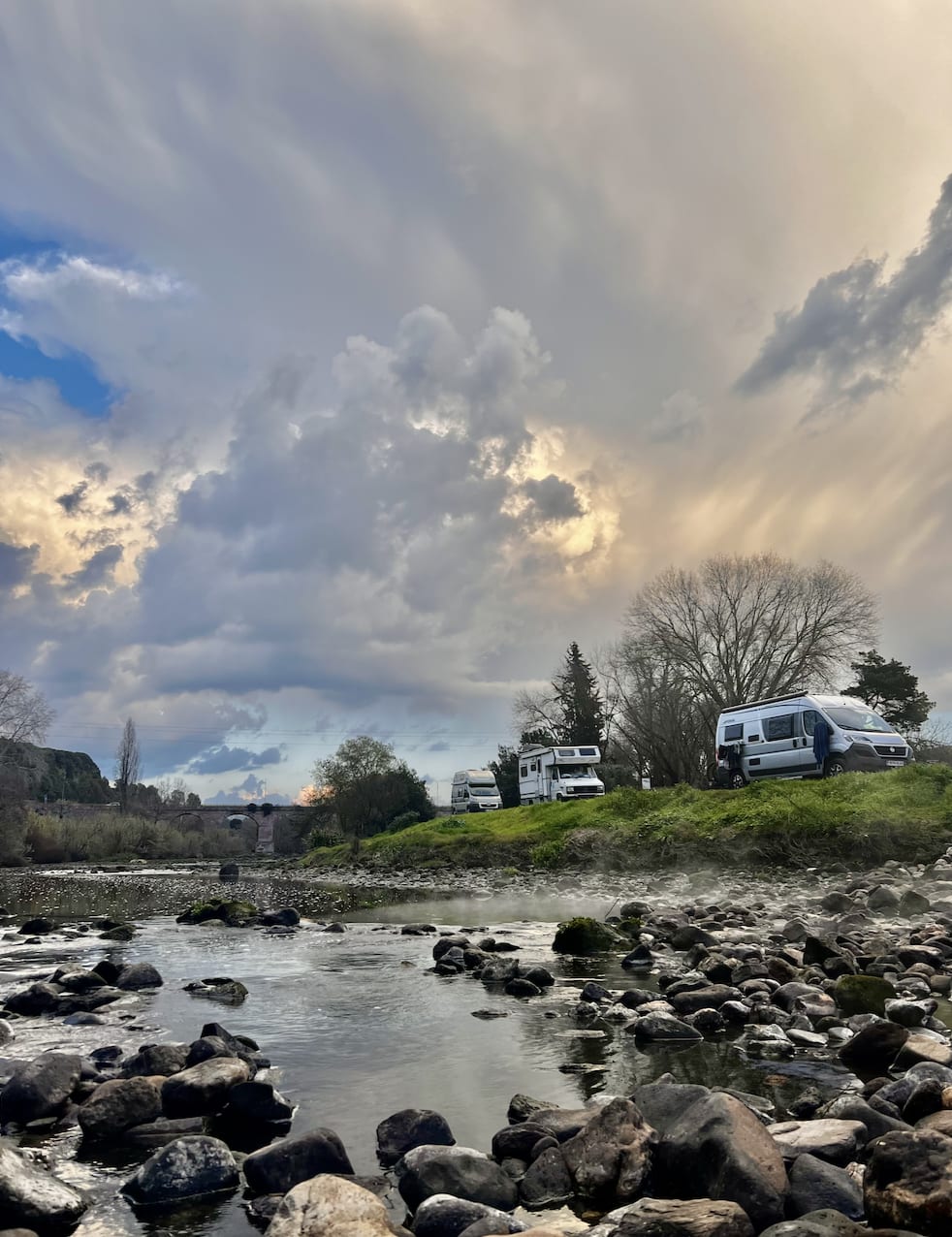
Our recommendation: Never drive onto dunes, beaches or protected vegetation, and always use proper waste disposal facilities. Respecting these places is what helps keep Sardinia beautiful for everyone.
5.Services
Everyday camper life: Water, groceries and practical tips
When you're travelling with your camper, it's often the little everyday things that make the biggest difference.
Where can you refill your water tank? Where can you empty your toilet? Will you find a supermarket before heading into the mountains?
Here are a few things worth knowing.
Fresh water and waste disposal
You can find motorhome service facilities at many campsites and designated stopovers.
However, don't assume that every public fountain is suitable for filling your drinking-water tank. Look for water clearly marked as potable.
If you're planning to spend a few days exploring remote parts of the island, fill up beforehand.
And make sure you know where your next waste disposal point is located.
In Sicily, especially during winter it is quite hard to find the trash, so be preparded and utisile always where you see trash cans.
Gas and fuel
If you're travelling with foreign gas bottles, check compatibility before arriving. Italian exchange systems may not accept your bottles.
Fuel stations are common around larger towns and main roads, but can be further apart in remote areas.
We'd recommend filling up before exploring the island's mountainous interior, particularly if you're driving a larger motorhome.
Internet and mobile reception
Mobile coverage is generally good around towns and populated coastal areas.
However, if you're planning to work remotely from your camper, don't assume you'll have a strong connection everywhere.
In the mountains and more remote inland areas, reception can be unreliable.
Download offline maps before setting off.
6.Routes
Northeast Sardinia: Turquoise beaches and granite landscapes
The northeast is probably what many people imagine when they think of Sardinia.
You'll find incredible beaches, granite rock formations, little bays and water in every shade of blue.
Places worth exploring include Capo Testa, Santa Teresa Gallura, San Teodoro and the coastline around Costa Smeralda.
Capo Testa is particularly interesting for its unusual rock formations and coastal walking paths.
Italy offers spectacular routes for every taste. Here you'll find some recommended CampPilot routes that will take you to the most beautiful places in the country.
7.Highlights
• Dolomites – spectacular mountain landscapes, UNESCO World Heritage
• Lake Garda – Italy's largest lake
• Cinque Terre – picturesque coast, UNESCO World Heritage
• Vesuvius – active volcano near Naples
• Etna (Sicily) – highest active volcano in Europe
• Amalfi Coast – spectacular coastal road
• Tuscany – gentle hills, vineyards
• Rome – capital, Colosseum, Vatican
• Venice – canals, gondolas, culture
• Florence – Renaissance, art, architecture
• Milan – fashion, cathedral, culture
• Naples – pizza, culture, history
• Verona – Romeo and Juliet, arena
• Siena – medieval city
• Pisa – Leaning Tower
• Beach holidays on the coasts
• Hiking in the Alps and Dolomites
• Water sports (surfing, diving, sailing)
• Skiing in the Alps
• Cycling
• Climbing
• Culture and city tours
• Wine tasting in Tuscany, Piedmont
• Pizza – originally from Naples
• Pasta – countless varieties
• Gelato – Italian ice cream
• Espresso – coffee culture
• Wine – Chianti, Barolo, Prosecco
• Cheese – Parmigiano, Mozzarella, Gorgonzola
• Olive oil – liquid gold
8.Costs
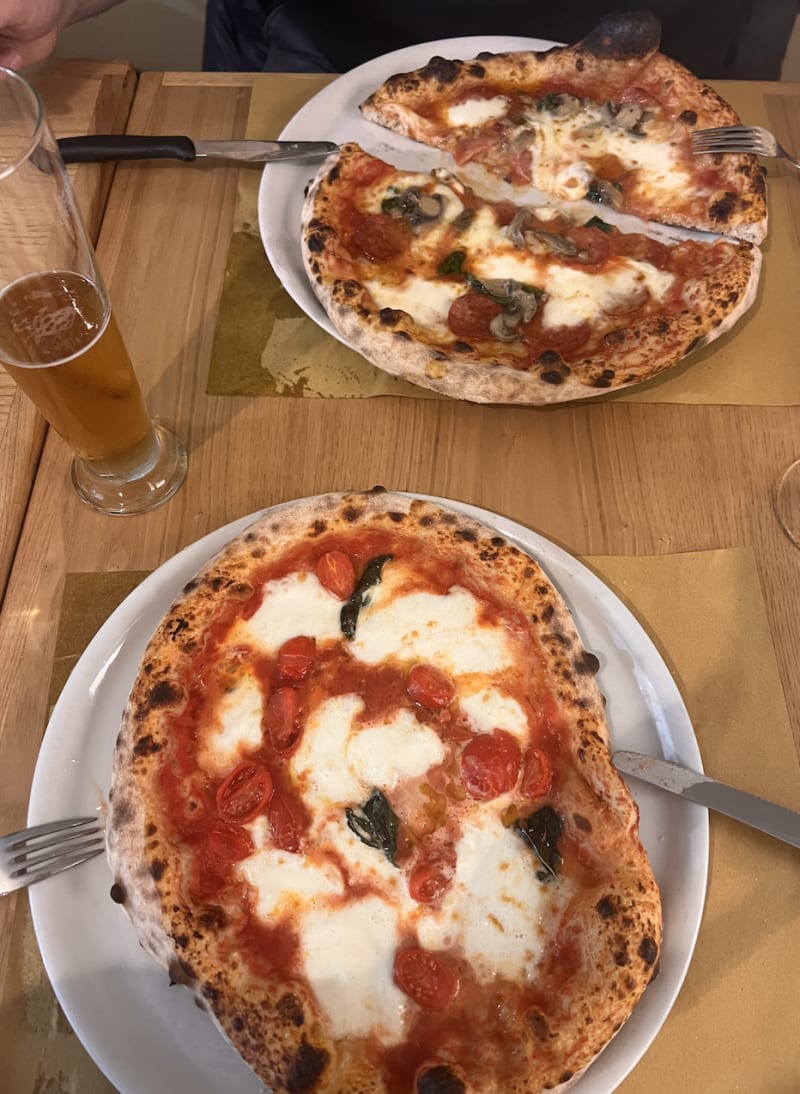
Sardinia isn't necessarily the cheapest destination for a campervan holiday, particularly during summer.
The ferry is often one of the biggest expenses, especially with a larger motorhome.
Accommodation prices also vary significantly depending on the location and season.
Typical Costs
Campsites: €20–70
Sosta: €8–25
Restaurant: 15-40€ per person
Ferries: €150–500+ return (depending on vehicle size & season)
Money-saving tips
Travel in May, June or September
Prefer inland agriturismo camping
Book your ferry early and compare different departure ports.
9.A few things we'd tell anyone planning their first Sardinia campervan trip
Don't underestimate the size of the island.
Distances might look short on the map, but winding coastal and mountain roads can make journeys much slower than expected.
Don't expect to park directly at every beautiful beach.
Some of Sardinia's most famous beaches have limited parking, access restrictions or require a walk to reach them. A campervan isn't always the best way to get right to the water.
Don't spend your entire trip on the Costa Smeralda.
It's beautiful, but Sardinia has so much more to offer. The west coast, the mountains and the small inland villages are just as worth exploring.
Don't assume that everything is open year-round.
Especially outside the main tourist season, check campsites, restaurants and services before driving somewhere remote.
And most importantly, don't rush.
You don't need to visit ten beaches in three days. Sometimes it's much nicer to find one beautiful area, stay for a while and explore it properly.
That's the beauty of travelling with your campervan.
10.Conclusion
Plan your Sardinia road trip with CampPilot
Planning a campervan trip around Sardinia can be a little overwhelming at first.
There are so many beautiful beaches, scenic roads and interesting villages to choose from. And on top of that, you need to find suitable places to stay overnight.
With CampPilot, you can plan a route around the places you want to explore, discover interesting stops along the way and find campsites and motorhome areas that fit your journey.
Whether you're planning a week along the northern coast or a three-week road trip around the entire island, a little preparation makes everything easier.
Our final tip? Plan the important things, like your ferry and overnight options, but leave some room for spontaneous detours.
Because in Sardinia, the places you didn't originally plan to visit might end up being your favourites. 🚐