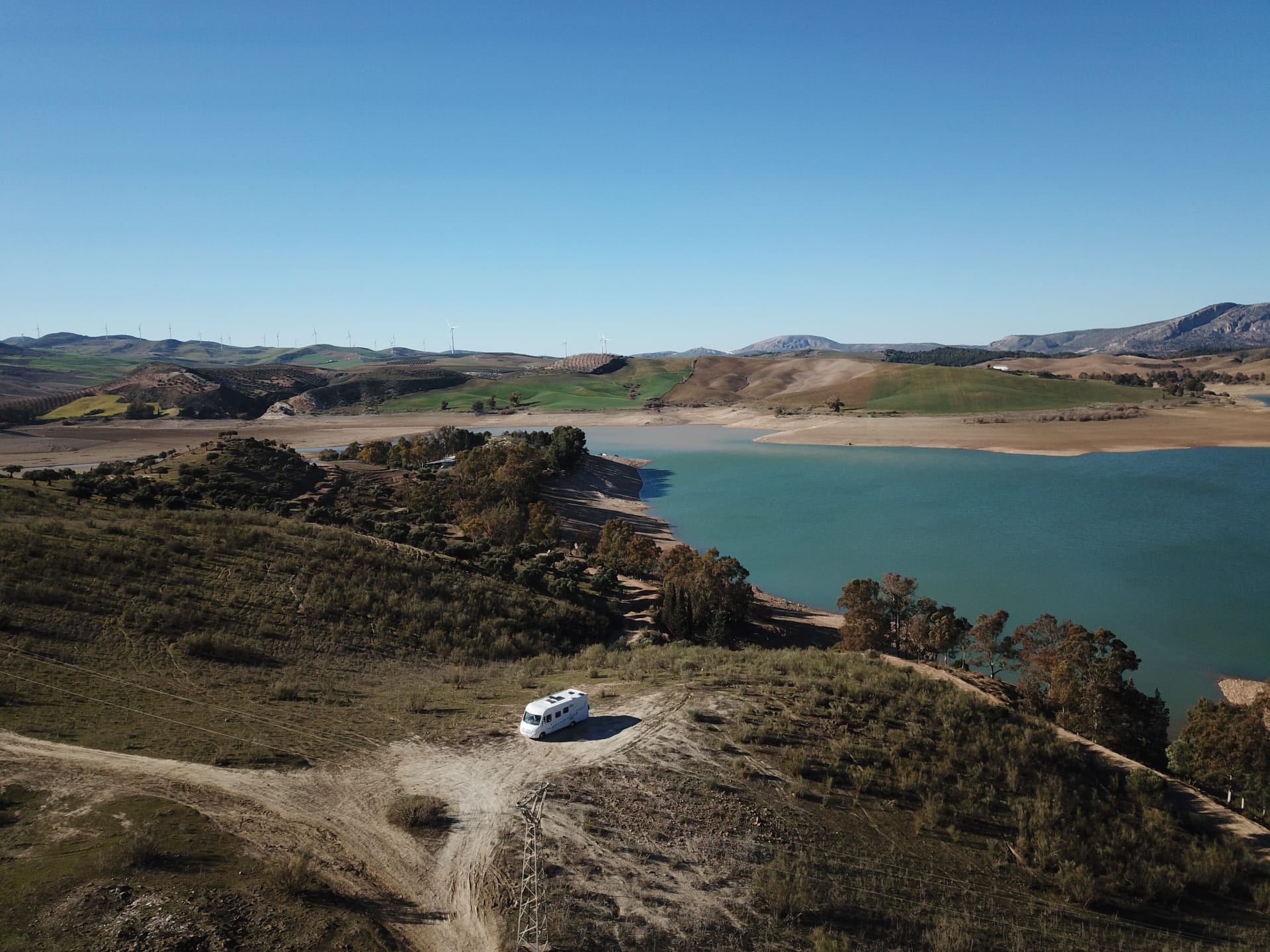
1.Overview
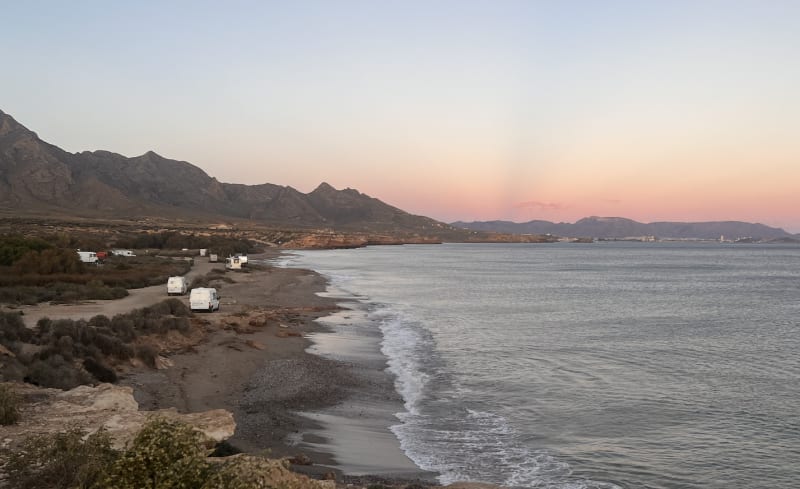
Spain is one of the most diverse travel destinations in Europe and, for campers, one of the most attractive places to explore. Nowhere else will you find such a unique blend of Mediterranean lifestyle, dramatic coastlines, major cultural cities, snow-covered Pyrenees, volcanic landscapes in the Canary Islands, and vast, sparsely populated natural regions in the interior—all within relatively short distances.
For motorhomes and campervans, Spain is ideal: the roads are excellent, the climate is mild almost year-round, and the tourist infrastructure—campsites, motorhome service points, supermarkets, and washing facilities—is among the best in Europe. Especially in winter, Spain’s southern regions and the Andalusian coast attract countless long-term campers escaping the cold northern climates.
But Spain is not a country you simply drive through. It is a country you truly experience: through its cuisine, fiestas, music, landscapes, and the laid-back nature of its people. Whether you’re surfing the wild Atlantic coast of the Basque Country, driving through the olive groves of Andalusia, exploring the endless plains of Extremadura, or hiking volcanic routes in Tenerife—Spain is always captivating, lively, and full of surprises.
2.Getting There
2.1 By Car or Motorhome
Most travellers enter Spain via France. Routes follow French highways or toll-free national roads toward the Basque Country (Irun), Catalonia (La Jonquera), or Navarra. Depending on your route, French tolls can be expensive, but once you cross into Spain, the costs drop significantly because many formerly tolled highways have been entirely toll-free since 2021.
Travelling by motorhome is straightforward. Both France and Spain have excellent transit routes, large service areas, and plenty of fuel stations. Spain is particularly camper-friendly—many autovías offer large rest areas with restaurants, hotels, showers, and even dedicated motorhome parking zones.
2.2 Ferries to Spain
Spain is also easily accessible by sea, particularly if you’re heading to the Balearic or Canary Islands. Major mainland ferry ports include Barcelona, Valencia, Denia, Cádiz, Huelva, and Algeciras. From these ports you can reach Mallorca, Menorca, Ibiza, Lanzarote, Fuerteventura, Gran Canaria, Tenerife, and La Palma.
Ferry companies such as Balearia, Trasmediterránea, FRS, and Naviera Armas operate frequent routes. Pre-booking is recommended—especially during school holidays. Ferries are generally modern, offering restaurants, lounges, cabins, and often dedicated areas for passengers travelling with pets.
2.3 Flying & Renting a Vehicle
If you arrive without your own vehicle, you’ll find a huge range of options. All major airports—Barcelona, Madrid, Málaga, Sevilla, Valencia, Bilbao, Palma, Las Palmas, Santa Cruz—offer both car rentals and, increasingly, campervan and motorhome rentals. Spain is considered one of the best countries for “fly & camp” holidays.
A rental camper is perfect for island trips or coastal road trips. Prices vary depending on the season but are generally fair, and the availability is excellent.
3.Entry & Formalities
3.1 Documents
As an EU citizen, you can enter Spain with your ID card or passport without any difficulty. There are no border checks within the Schengen area, so entry usually goes unnoticed. Pets with an EU pet passport, microchip, and valid rabies vaccination can also enter without extra formalities.
3.2 Vehicle Regulations
Regular EU regulations apply when entering Spain by car. You must carry a warning triangle, safety vest, and all vehicle documents. A green insurance card is not mandatory but can simplify procedures in case of an accident.
Spain has several low-emission zones (Zonas de Bajas Emisiones), especially in Barcelona, Madrid, Sevilla, and other major cities. Many require advance registration of foreign vehicles, and fines for non-compliance can be steep—so it’s best to check ahead.
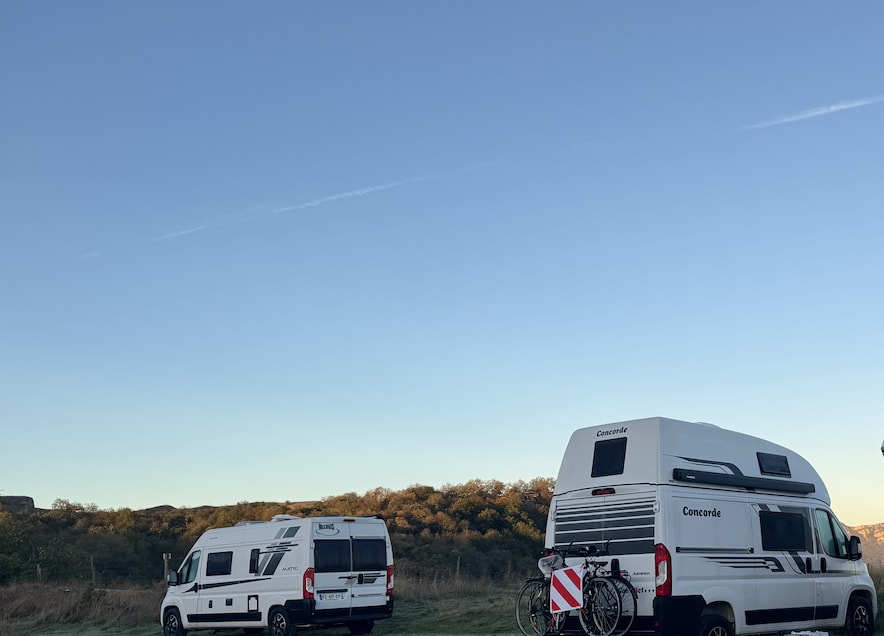
A very important rule for motorhomes and campervans: Spain requires a special warning panel whenever any load extends from the rear of the vehicle. This includes bicycle racks—even when empty.
The rule is strict: the panel must be red and white with three red and three white diagonal stripes. It must be firmly mounted and kept clean and visible. Using the wrong panel, such as the Italian metal version or the German version, can result in a fine.
This rule applies to:
mounted bicycles
empty bicycle racks
any type of load extending from the rear
If you continue your trip into Portugal or Italy, be aware that their panels differ in design. For Spain, only the red-white diagonal version with six stripes is valid.
4.Driving in Spain
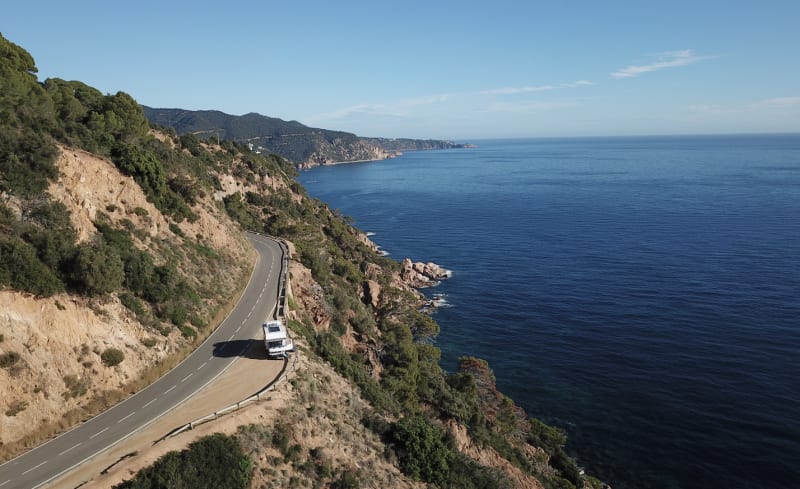
Spain has one of the most modern road networks in Europe. Autovías (A-roads) are usually free and well maintained. Autopistas (AP-roads) were once almost entirely tolled, but many of these routes are now fully free to use.
Driving culture tends to be calm and disciplined. Spanish drivers generally stick to the rules, trucks drive predictably, and the police enforce speed limits strictly. In summer, especially in the south, temperatures can be extremely high, so vehicles should be well maintained—long climbs can challenge engines and brakes.
Some of the most scenic routes include:
the coastal roads of the Costa Brava
mountain passes in the Pyrenees
desert roads around Almería
the volcanic landscapes of the Canary Islands
Tenerife, La Palma, and Gran Canaria feature spectacular mountain roads with tight switchbacks—perfect for adventurous drivers but not ideal for large or unwieldy motorhomes.
5.Camping
5.1 Campsites
Spain has one of Europe’s densest and highest-quality camping networks. Along the coasts, campsites line up like pearls on a string, often with direct access to the beach, palm groves, or panoramic sea views. Inland, you’ll find spacious campsites set among vineyards, orange groves, or within national parks.
Most campsites offer:
well-maintained sanitary buildings
swimming pools (especially in the south)
restaurants and bars
small supermarkets
washing machines and dryers
high-quality shaded pitches
The atmosphere is almost always friendly and relaxed. In the off-season, campsites are pleasantly quiet. Prices vary by region and season, typically between €15 and €35 per night for two people and a vehicle—coastal areas in summer are more expensive, winter in Andalusia is often cheaper.
5.2 Wild Camping
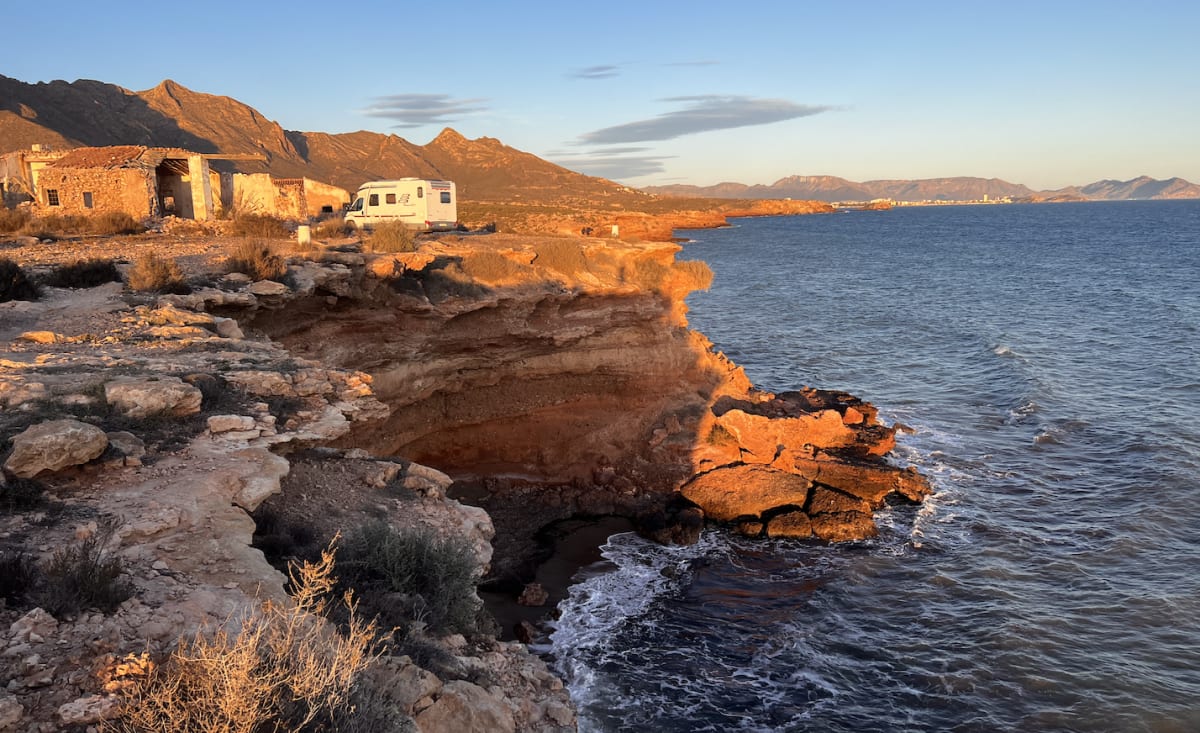
Wild camping is quite often tolerated, especially in the winter months. In mountain areas or remote inland regions, spending one quiet night is usually acceptable as long as you behave respectfully and leave no trace.
Along the coasts, however, the rules are stricter. Many municipalities take action against wild camping, especially in peak season. The Guardia Civil often patrols and may kindly but firmly ask you to move on.
The best option is to use official motorhome areas (Áreas de autocaravanas). Hundreds of towns offer them—many are free or very inexpensive, often centrally located, and equipped with water and waste stations.
6.Services & Food
Spain is a camper’s paradise thanks to its excellent infrastructure. Motorhome service points are found in almost every town, often for free. Many municipalities operate official parking areas with waste disposal, electricity, and water. Fuel stations usually have small convenience shops, and Repsol stations often feature laundromats or gas bottle exchanges.
Supermarkets are widespread. The most popular chain is Mercadona, followed by Carrefour, Consum, Lidl, and Dia. Fresh produce, bread, fish, and wine are excellent quality and significantly cheaper than in northern Europe.
6.1 Food – What You Should Definitely Try
Spain is a culinary paradise, and food plays a major social and cultural role. Travelling through the country is also a journey through its gastronomic traditions.
Tapas are one of Spain’s greatest joys: small shared dishes that allow you to explore regional flavours. Patatas bravas, meatballs in sauce, fried calamari, or Pimientos de Padrón—each region has its own specialties.
Valencia is the birthplace of paella, traditionally made with chicken, rabbit, and vegetables. Along the Atlantic coast, fish and seafood dominate, while the north is known for hearty dishes with legumes and stews.
Unforgettable treats include Iberian ham, Manchego cheese, fresh churros with hot chocolate, and strong Spanish coffee. Spain’s culinary identity is shaped by regional diversity—every province has its own tastes and traditions.

7.Routes
Costa Brava Roadtrip
8.Highlights
• Pyrenees – spectacular mountain landscapes, hiking, skiing
• Picos de Europa – national park with breathtaking peaks
• Doñana National Park – wetlands, flamingos, wildlife
• Teide (Tenerife) – highest mountain in Spain (3,718m)
• Camino de Santiago – famous pilgrimage route
• Costa Brava – picturesque coast with hidden coves
• Tabernas Desert – only desert in Europe
• Barcelona – Gaudí architecture, beach, culture
• Madrid – capital, museums, nightlife
• Seville – flamenco, cathedral, Moorish architecture
• Granada – Alhambra, Moorish heritage
• Valencia – modern architecture, paella
• Bilbao – Guggenheim Museum
• Toledo – historic old town
• Córdoba – Mezquita, Moorish architecture
• Beach holidays on the coasts
• Hiking in the Pyrenees and other mountains
• Water sports (surfing, diving, sailing)
• Skiing in the Pyrenees and Sierra Nevada
• Cycling (Vía Verde routes)
• Climbing
• Culture and city tours
• Wine tasting in Rioja and other regions
• Paella – national dish
• Tapas – small dishes to share
• Jamón Ibérico – Spanish ham
• Sangría – refreshing drink
• Gazpacho – cold soup
• Churros – sweet pastry
• Fresh seafood
9.Prices
Eating out is affordable, especially lunchtime menus (Menú del día) for €10–15. Campsites usually range from €20 to €35, though coastal areas in summer are significantly more expensive.
Supermarkets offer excellent quality at very reasonable prices, particularly fresh fruit, vegetables, bread, fish, and wine.
10.Safety
One important point for travellers—often underestimated—is that you should not sleep overnight at motorway service areas. These places are safe and busy during the day, but at night—especially on major transit routes—they are considered less secure. There are recurring cases of theft from vehicles, break-ins, or tricks used to surprise sleeping travellers.
Police strongly advise overnighting only at official motorhome areas, campsites, or municipal parking zones. Luckily, these are plentiful, usually inexpensive or even free, and far more secure.
Overall, Spain is a very relaxed and safe country to travel in. As long as you follow standard precautions and avoid service stations at night, you can enjoy an extremely comfortable and worry-free journey.
11.Conclusuon
Exploring Spain with a motorhome or campervan is one of the most rewarding ways to experience the country’s incredible variety. From wild Atlantic coastlines to volcanic islands, from vibrant historic cities to peaceful rural landscapes, Spain offers an ever-changing backdrop that makes every journey unique. With excellent infrastructure, friendly locals, and a mild climate throughout most of the year, it is a perfect destination for both long road trips and relaxed winter escapes.
With a bit of preparation, respect for local rules, and an open sense of adventure, you can travel safely, comfortably, and completely at your own pace. Whether you’re enjoying tapas in Andalusia, hiking in the Pyrenees, surfing in the Basque Country, or watching sunsets on the Canary Islands, Spain rewards you with unforgettable experiences and a deep sense of freedom on the road.
It’s no wonder that many travelers return again and again—Spain simply makes every camper journey feel special.