
21-Day Road Trip
Alaska Tour


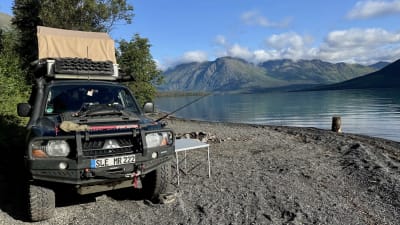
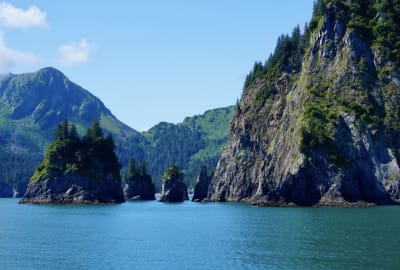

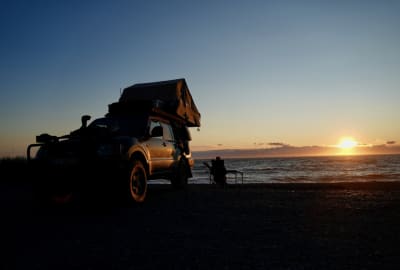
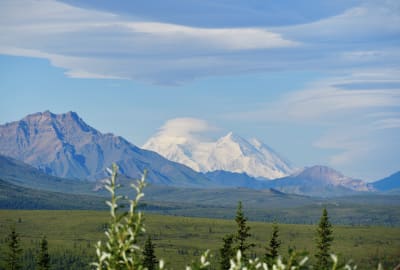
At a Glance
Distance
4335 km
Duration
21 days
Stopovers
22
About This Trip
Alaska is the bucket list destination for North American RV and campervan travellers - a state so vast it could contain Texas twice over, with a road network sparse enough that driving it feels like genuine exploration rather than tourism. This 21-day grand loop is as complete a picture of Alaska as a single road trip can deliver: the Fortymile gold rush country of the Interior, the university city of Fairbanks under the Midnight Sun, the sub-Arctic wilderness of Healy and the approaches to Denali, the quirky climbing town of Talkeetna, the glacier-carved drama of Whittier and Prince William Sound, the astonishing peninsula drive to Homer - the Halibut Capital of the World - and finally the epic ALCAN highway south through the Yukon and British Columbia to the remote frontier town of Hyder.
What makes Alaska so extraordinary for camper travellers is the scale of everything. The moose are bigger than horses. The mountains make the Alps look modest. The rivers run jade-green with glacial melt. Brown bears fish salmon alongside the road. Eagles outnumber crows. And the light - particularly in June and July, when the sun barely sets - turns every evening into a golden hour that never ends. You will not sleep normally. You will not want to. You will cook dinner at 11pm in full daylight and feel like you've been given extra hours that the rest of the world doesn't have.
Alaska rewards slow travellers. The distances look manageable on a map until you realise that 100 miles of Alaska highway often takes three hours - roads are remote, wildlife crossings are frequent, and the scenery demands constant stopping. The 21-day structure of this trip is not generous; it is approximately right. Rush it and you will arrive home with beautiful photographs but a nagging sense that you saw Alaska through a windscreen rather than experiencing it. Take the time to fish, to hike, to sit beside a river and watch for bear, to do absolutely nothing for an hour in a place of extraordinary beauty. That is when Alaska begins to make sense.
Camper bucket list
Pan for real gold at Chicken Gold Camp - and keep whatever you find
Watch the Midnight Sun from your camper at Fairbanks at 1am, the sky still glowing amber
See Denali - all 20,310 feet of it - from the Eielson Visitor Center on a rare clear day
Book a flightseeing tour from Talkeetna over the Alaska Range and circle the summit of Denali from the air
Drive the Anton Anderson Memorial Tunnel - the longest shared road-rail tunnel in North America - to reach Whittier
Kayak among calving icebergs in Prince William Sound out of Whittier
Pull up a 100-pound halibut from 250 feet of water on a Homer Spit fishing charter
Watch brown bears fishing for salmon at Brooks Falls - accessible by floatplane from Homer or King Salmon
Wake up at Primrose campground beside Kenai Lake to absolute silence, a mirror-still lake, and no other humans in sight
Cross back into British Columbia on the ALCAN and spend a final night in Hyder - a town so remote it operates on Canadian time
Route Map
Stopovers
Good to Know
Book everything at Denali months ahead.
The park bus system to Wonder Lake (the key viewpoint), Riley Creek campground, and all park-area lodging sells out for July dates many months in advance. Go to recreation.gov and nps.gov/dena the moment your travel dates are confirmed. This is the single most important planning step for the entire trip.
Fuel is expensive and stations are far apart.
Alaska fuel prices are consistently higher than the Lower 48, sometimes significantly so in remote areas. Between Chicken and Fairbanks (Taylor Highway), between Talkeetna and the parks, and along the ALCAN in Canada, stations can be 100+ miles apart. Never pass a fuel station with less than half a tank. Budget an additional $0.50–1.00 per gallon above current US averages for remote stretches. Carry a fuel jerry can for the most isolated legs.
Mosquitoes are serious - prepare for real conditions.
Interior Alaska mosquitoes (Healy, Fairbanks, and particularly near wetlands in June and July) can be intense enough to make outdoor cooking unpleasant without protection. Carry DEET-based repellent at 30–40% concentration, a head net (genuinely useful, not just precautionary), and long sleeves for evening hours near standing water. The coast (Homer, Whittier) is much better, and most windy locations are fine. This is not a reason to avoid Alaska - just a reason to be prepared.
Alaska time: everything is slower and that's the point.
Alaskan roads are slower than the speed limits suggest - wildlife crossings, gravel sections, construction zones, and the compulsive need to stop for every mountain view add time to every drive. Factor at least 30% extra time over any estimated drive duration. The 577 km from Palmer to the Alcan border (stop 21) is a full day of driving on excellent roads - but it's still a full day. Alaska is not a state to rush through; it's a state to inhabit, even briefly.
Packing Checklist
Weather & Seasonality
May
Jun
Jul
Aug
Sep
Oct