
45-Day Road Trip
Canada from East to West



At a Glance
Distance
11656 km
Duration
45 days
Stopovers
72
About This Trip
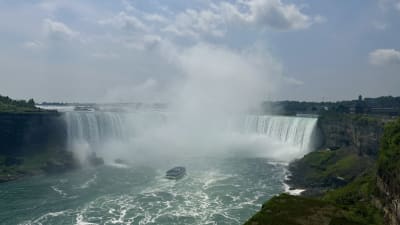
There are road trips - and then there’s this one. If you take around 45 days and drive from Halifax on the Atlantic coast all the way to the Arctic Ocean in Tuktoyaktuk - and then return via the Pacific coast - you haven’t simply traveled through Canada. You’ve experienced it. This country is unimaginably vast, and this route makes you feel every bit of it: the salty sea air of Nova Scotia, the thunder of Niagara Falls, the endless openness of the Canadian prairies, the first appearance of the Rockies on the horizon like scenery from another world, the surreal beauty of the Icefields Parkway between Banff and Jasper - and then the Dempster Highway, the narrow gravel ribbon carrying you through the Yukon and Northwest Territories to the edge of the world.
Tuktoyaktuk. “Tuk,” as the locals call it. An Inuit community on the Beaufort Sea, accessible year-round by road only since 2017. Here you hear the ice crack, see beluga whales in the shallow water, and stand with both feet in the Arctic Ocean. There is no more dramatic endpoint for a camper journey in the northern world.
The return trip is no comedown - it’s a chapter of its own: back through the Yukon across the Alcan border into Alaska, down through Tagish and Stewart, along British Columbia’s spectacular coastline and the islands of Haida Gwaii, across Vancouver Island with Pacific Rim National Park, Telegraph Cove, and San Josef Bay, all the way to Neah Bay and Sekiu on the northwestern coast of the United States. 72 stops. One single camper. Your life on wheels.
Bucket List
Stand at the lighthouse in Peggy’s Cove at sunrise, before the tour buses arrive
Eat freshly cooked lobster straight from the harbor in Lunenburg — ideally with butter and an ocean view
Experience Niagara Falls at dawn before the daytime crowds appear
Camp along the lonely north shore of Lake Superior, where the lake looks like an ocean
Photograph bison from your camper in Riding Mountain National Park
See Lake Louise at first light before the rush begins — you never forget the turquoise water in the morning glow
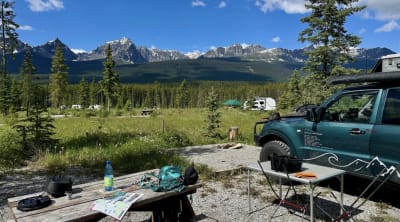
Drive the Icefields Parkway without rushing — every curve reveals a new masterpiece
Drive the entire Dempster Highway — from Dawson City to Tuktoyaktuk, gravel and all
Touch the Arctic Ocean. Just because you can.
Watch whales from a kayak in Telegraph Cove, BC
Experience Long Beach on Vancouver Island during a storm
Jump into the water at Neah Bay, Washington — the northwesternmost point of the continental United States
Stopovers
Good to Know
Parks Canada Discovery Pass: Essential for This Route
You’ll be driving through Banff, Jasper, Pukaskwa, and Pacific Rim — all Canadian national parks require a Parks Pass. The Discovery Pass (around 80 CAD per person, about 145 CAD for families/groups) provides unlimited access to all Parks Canada locations and pays for itself by the third national park. Purchase it at Parks Canada or directly at park entrances.
Dempster Highway Ferries Have Seasonal Operating Periods - Check Before Departure
The Dempster Highway crosses the Peel River and Mackenzie River via ferry in summer and ice bridges in winter. During transition periods (typically October–November and April–May), crossings are not possible. Current road and ferry conditions are available at 511 Yukon and Northwest Territories Highways.
Bear Safety: Relevant for All 45 Days
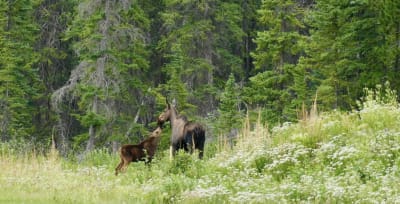
From Nova Scotia to the Pacific coast, you may encounter both black bears and grizzlies. Always keep bear spray within easy reach. Never leave food outside the vehicle. Coolers stored outdoors are especially problematic in bear territory. Many national parks enforce specific campsite food-storage regulations. Along the Dempster Highway and in the Arctic, grizzlies are common — extra vigilance is essential.
Mosquitoes in the North: Their Own Ecosystem
The Yukon and Northwest Territories in June and July are infamous for intense mosquito activity. DEET 30–40% is not a comfort item — it’s survival gear. Bring mosquito nets for both your head and sleeping area. Evenings in damp, windless locations are the worst. That’s not an exaggeration.
Packing Checklist
Weather & Seasonality
May
Jun
Jul
Aug
Sep
Oct